When it comes to upgrading a kitchen with a refrigerator that balances sleek design, smart features, and real-world reliability, the Bosch 800 series refrigerator consistently lands near the top of homeowners’ shortlists. Unlike flashy appliances that promise the moon but fall short on daily performance, Bosch builds these units with German engineering precision, think tight door seals, whisper-quiet compressors, and features that actually solve storage headaches. Whether someone’s gutting a dated kitchen or simply swapping out an aging fridge, understanding what sets the Bosch refrigerator 800 series apart can save both money and buyer’s remorse down the line.
Table of Contents
ToggleKey Takeaways
- The Bosch 800 series refrigerator combines German engineering with practical innovations like the VitaFresh Pro system, which extends produce freshness by days or weeks through climate-controlled drawers with adjustable humidity.
- Smart features such as HomeConnect WiFi integration allow remote temperature adjustments, door-open alerts, and diagnostics via smartphone, making troubleshooting and vacation monitoring convenient and functional.
- The Bosch 800 series counter-depth models fit standard kitchen cutouts at 36 inches wide and 24–25 inches deep, with configuration options ranging from French door to four-door layouts to match any kitchen footprint.
- Energy efficiency and quiet operation—featuring ENERGY STAR certification, 38–42 decibel noise levels, and dual evaporators that maintain stable temperatures—result in approximately $70–$85 annual electricity costs.
- Proper installation requires a dedicated 120V, 15-amp circuit, careful measurement of door swing clearance (roughly 20 inches on each side for French doors), and a reliable water line connection for dispenser models.
- Routine maintenance—including condenser coil cleaning every 6–12 months, scheduled water filter replacements, and quarterly door gasket inspections—keeps the refrigerator running optimally for 15+ years with resale value recovering 40–50% of the original cost.
What Makes the Bosch 800 Series Refrigerator Stand Out?
Bosch didn’t reinvent refrigeration with the 800 series, they refined it. The lineup emphasizes practical innovations over gimmicks, focusing on temperature stability, flexible storage, and long-term durability.
The VitaFresh Pro system is the headliner. It uses separate climate-controlled drawers with adjustable humidity to extend produce life by days, sometimes weeks. One drawer can keep leafy greens crisp while the other maintains optimal conditions for deli meats or cheese. This isn’t marketing fluff, independent testing shows measurable differences in how long produce stays fresh compared to standard crisper drawers.
Another standout: HomeConnect WiFi integration. Users can adjust temperatures remotely, receive door-open alerts, and run diagnostics through a smartphone app. It’s genuinely useful when troubleshooting an error code at 9 p.m. or double-checking the fridge is closed after leaving for vacation. Some smart refrigerators lean heavily on touchscreen gimmicks, but Bosch keeps the tech functional.
Key Features and Innovations
- Dual Evaporators: Separate cooling systems for the fridge and freezer prevent odor transfer and maintain optimal humidity in each compartment.
- LED Lighting: Bright, energy-efficient lights positioned along the sidewalls and ceiling eliminate shadows. No more hunting for condiments in dark corners.
- Adjustable Glass Shelves: Spill-proof glass shelves with sliding mechanisms allow for tall items like pitchers or wine bottles without removing entire shelves.
- Ice Maker Options: Models come with either traditional ice makers or external dispensers. Some units skip the dispenser to maximize interior space, a smart trade-off for households that don’t need filtered water at the door.
- Stainless Steel Construction: The Bosch 800 series counter depth refrigerator features fingerprint-resistant stainless that actually works. A damp microfiber cloth is usually enough to keep it looking clean.
Available Models and Configurations
Bosch offers the 800 series in multiple layouts, so homeowners can match their kitchen footprint and storage preferences without compromise.
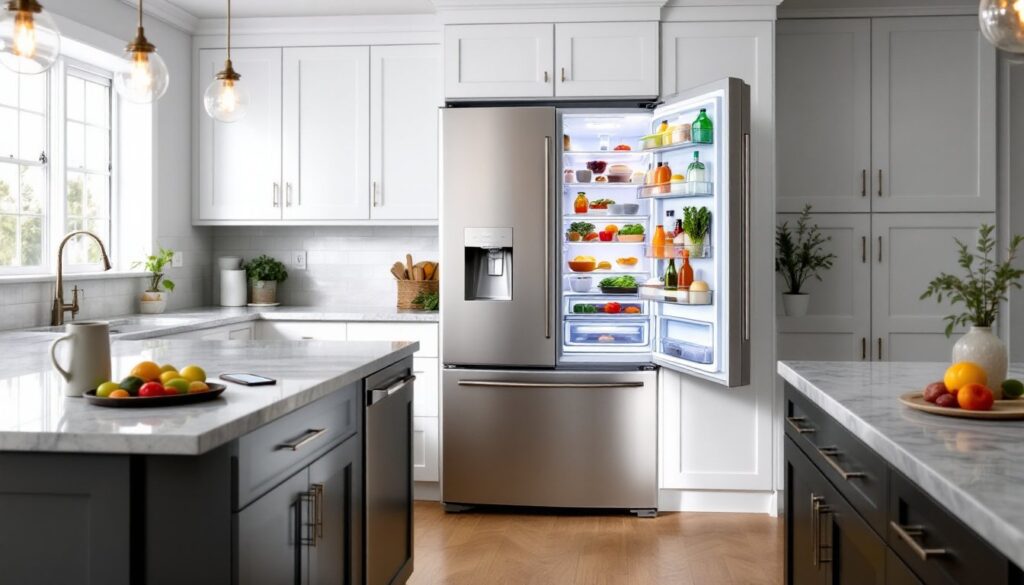
French Door Models are the most popular. The Bosch 800 series french door refrigerator typically comes in 36-inch widths, fitting standard kitchen cutouts without cabinet modification. The top section houses dual doors for fresh food, while a bottom freezer drawer provides easy access to frozen items. Counter-depth versions (around 24 inches deep) sit flush with standard cabinetry, creating a built-in look without custom panels.
The Bosch french door refrigerator 800 series comes in both freestanding and counter-depth configurations. Freestanding models offer slightly more interior volume, usually 21–23 cubic feet, while counter-depth versions trade a few cubic feet for streamlined aesthetics. For kitchens with limited clearance, the counter-depth option prevents the fridge from jutting awkwardly into walkways.
Four-Door Models add a middle drawer between the fridge and freezer. The Bosch 4 door refrigerator gives an extra climate zone, ideal for items like beverages, snacks, or marinating proteins. It’s a premium feature that increases the price but solves real organization problems for larger households.
Bottom-Mount Freezers: The Bosch 800 series french door bottom mount refrigerator places frequently accessed fresh food at eye level, reducing the need to bend down. The freezer drawer typically features dividers and sliding baskets to keep frozen goods organized, no more avalanche of frost-covered bags.
Most configurations include either internal ice/water dispensers or external through-the-door options. Internal dispensers free up shelf space and maintain a cleaner exterior, though they require opening the door. External dispensers add convenience but slightly reduce interior capacity.
Performance and Energy Efficiency
The Bosch 800 refrigerator earns its ENERGY STAR certification through smart compressor tech and efficient insulation. Annual energy use typically falls between 600–700 kWh, translating to roughly $70–$85 per year in electricity costs at average U.S. rates. That’s competitive with other premium brands and noticeably lower than older models from the 2000s.
Noise levels hover around 38–42 decibels during normal operation, quieter than a library. The variable-speed compressor adjusts cooling intensity based on usage patterns, so it’s not cycling on and off constantly. Open-concept kitchens benefit most from this, as there’s no intrusive hum during meal prep or conversations.
Temperature consistency is where Bosch excels. The dual evaporator system maintains the fridge section at a stable 37–38°F and the freezer at 0°F without wild fluctuations. This matters for food safety and quality, milk doesn’t spoil prematurely, and ice cream stays scoopable without refreezing into a brick.
The VitaFresh Pro drawers handle humidity-sensitive items better than competitors. Testing shows lettuce and herbs can last 7–10 days compared to 3–5 in standard crispers. Meats stored in the low-humidity drawer stay fresh longer without freezing.
One caveat: the water filter (model BORPLFTR50) needs replacement every six months for optimal performance. Ignore it, and water flow slows and filtration suffers. Genuine Bosch filters run $40–$50, though third-party options exist at lower price points.
Installation Considerations for Your Kitchen
Before ordering a Bosch 36 inch refrigerator, verify the actual cutout dimensions, not just the fridge width. Counter-depth models require at least 68–70 inches of height clearance (including hinge space), 36 inches width, and 24–25 inches depth from the wall to the front of the cabinet face. Freestanding versions need 29–31 inches depth to accommodate the full body plus door swing.
Door swing is critical. French doors need roughly 20 inches of clearance on each side to open fully. If the fridge sits next to a wall or island, measure the arc carefully. Some Bosch models offer reversible hinges, but not all, confirm this during purchase if the kitchen layout demands it.
Electrical and plumbing: A standard 120V, 15-amp dedicated circuit is required. The fridge should never share an outlet with other major appliances. For models with water/ice dispensers, run a 1/4-inch copper or braided stainless supply line from the nearest cold water source. Avoid using the saddle valve that comes in cheap installation kits, they leak. A proper compression tee or shut-off valve installed into the main line is more reliable. If there’s no existing water line, this may require opening drywall or running plumbing through cabinets. Not a huge job, but plan for it.
Many stainless-steel refrigerators ship with protective film on the exterior, peel it off after installation to avoid scratching during handling.
Leveling the fridge ensures doors close properly and prevents compressor strain. Use the adjustable front feet to tilt the unit slightly backward (about 1/4 inch). This helps doors self-close and prevents the fridge from tipping forward when drawers are pulled out.
Safety note: Always disconnect power before working on electrical connections. If the installation requires modifying cabinetry or moving gas lines (if near a range), consult a licensed contractor.
Maintenance Tips to Maximize Longevity
Routine upkeep on a Bosch french door refrigerator is straightforward but non-negotiable for peak performance.
Clean condenser coils every 6–12 months. Most 800 series models have coils underneath the unit. Unplug the fridge, remove the front grille, and vacuum dust buildup using a coil brush or crevice tool. Dirty coils force the compressor to work harder, increasing energy use and shortening lifespan.
Replace water filters on schedule. The HomeConnect app sends reminders, but mark it on a calendar if you’re not using the app. A clogged filter reduces water flow and can introduce contaminants.
Inspect door gaskets quarterly. Run a hand along the seal, any gaps or cracks let cold air escape, forcing the compressor to run longer. Clean gaskets with warm, soapy water and dry thoroughly. If they’re torn or stiff, replacement gaskets are available directly from Bosch (around $60–$100 depending on model).
Defrost the freezer manually if frost buildup exceeds 1/4 inch. While Bosch uses auto-defrost tech, heavy usage or frequent door openings can cause minor ice accumulation. A plastic scraper works: never use metal tools or a heat gun, which can damage the liner.
Keep vents clear inside both compartments. Don’t pack items against the back wall where air circulates. Blocking vents creates warm spots and reduces cooling efficiency.
For kitchen organization enthusiasts, labeling shelves and drawers helps maintain the VitaFresh system’s effectiveness, produce in the high-humidity drawer, meats in the low-humidity one.
PPE reminder: Wear work gloves when handling the unit during moves or deep cleaning to avoid cuts from sharp edges.
Is the Bosch 800 Series Worth the Investment?
At $2,800–$4,200 depending on configuration and retailer promotions, the Bosch 800 series refrigerator counter depth sits in the premium tier. That’s a significant upfront cost compared to mid-range brands, so the value equation depends on priorities.
Buy if: Long-term reliability, whisper-quiet operation, and genuinely useful smart features matter. Bosch appliances typically run 15+ years with proper maintenance, longer than many competitors. The VitaFresh system pays for itself in reduced food waste, especially for households that buy fresh produce in bulk. Energy efficiency also compounds savings over time.
Skip if: Budget constraints are tight or the kitchen sees light use. A household that eats out frequently or doesn’t prioritize fresh food storage won’t fully use the 800 series’ strengths. In those cases, a mid-tier model with basic features makes more sense.
Warranty coverage is standard: 1 year parts and labor, with extended warranties available through retailers. Bosch’s service network is robust in most U.S. metro areas, though rural locations may face longer wait times for technician visits.
Resale value holds well. A well-maintained Bosch refrigerator french door can recoup 40–50% of the original price if selling within 5–7 years, higher than most appliance categories.
For homeowners planning a kitchen remodel or replacing a failing fridge, the 800 series delivers measurable performance gains. It’s not the cheapest option, but it’s one of the few that consistently lives up to its marketing.