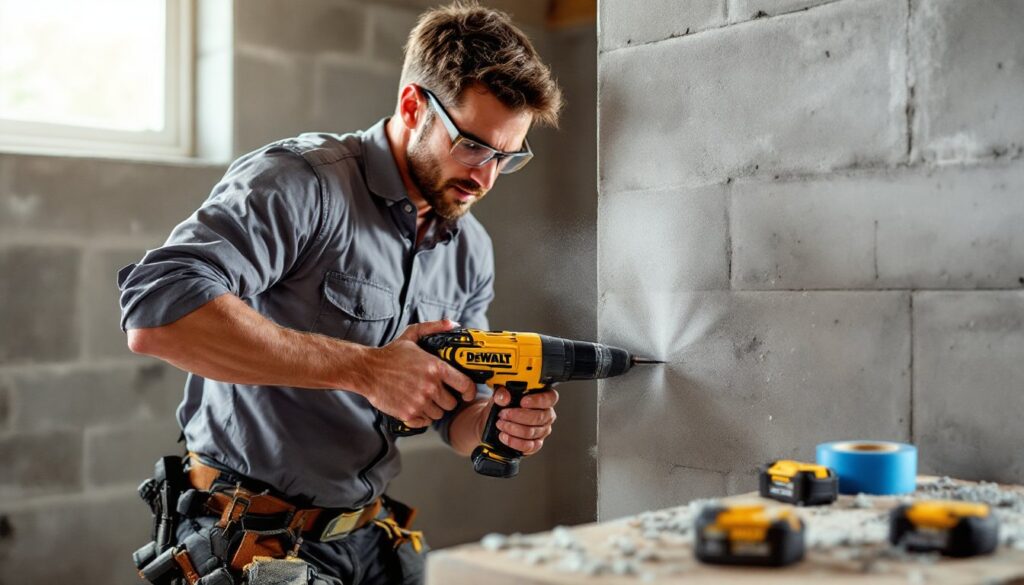
If you’ve ever tried drilling into concrete with a standard drill, you know the frustration, slow progress, overheating, and a sore arm. That’s where a hammer drill changes the game. DeWalt’s lineup of hammer drills has earned a solid reputation among DIYers and pros alike for reliability, power, and smart engineering. Whether you’re hanging heavy shelving on a brick wall, installing outdoor fixtures, or tackling a basement renovation, the right hammer drill makes masonry work feel less like a battle. This guide walks through everything needed to pick the best DeWalt hammer drill for the job and use it safely and effectively.
Table of Contents
ToggleKey Takeaways
- A DeWalt hammer drill combines rotary drilling with rapid hammering action to break through concrete, brick, and masonry faster and easier than standard drills.
- Cordless 20V DeWalt hammer drill models offer the best balance of convenience and power for most DIYers, while corded versions deliver consistent torque for heavy-duty, all-day projects.
- Choose a hammer drill with at least 30,000–40,000 BPM, a 1/2-inch chuck, and a brushless motor to maximize drilling speed, bit compatibility, and tool longevity.
- Always use carbide-tipped masonry bits, wear safety glasses and ear protection, and clear dust frequently to ensure safe and effective drilling in concrete and brick.
- DeWalt hammer drills excel for home projects like mounting heavy shelving, installing outdoor fixtures, finishing basements, and building fences—making them essential for any serious DIYer.
What Is a DeWalt Hammer Drill and Why Do You Need One?
A hammer drill combines rotary drilling with a rapid hammering action, delivering thousands of impacts per minute to break through hard materials like concrete, brick, stone, and masonry block. Unlike a standard drill that simply spins, a hammer drill adds percussive force that chips away at dense surfaces while the bit rotates.
DeWalt’s hammer drills are designed with both occasional DIYers and heavy users in mind. The DeWalt 20V hammer drill models deliver enough punch for typical home projects, anchoring ledger boards to a concrete foundation, drilling holes for Tapcon screws in a basement wall, or mounting a deck railing into brick. The hammering mechanism can be switched off when working with wood, metal, or plastic, making the tool versatile enough to handle everyday drilling tasks too.
You’ll need a hammer drill anytime you’re fastening into masonry or concrete. Standard twist bits simply overheat and dull when forced into these materials. Masonry bits paired with a hammer drill cut faster, last longer, and require far less effort. If your project list includes outdoor lighting, wall-mounted storage in a garage, or installing a bathroom grab bar on tile over concrete backer, a hammer drill isn’t optional, it’s essential.
Top DeWalt Hammer Drill Models for Homeowners and DIYers
DeWalt offers several hammer drill options that fit different budgets and use cases. The DCD796 and DCD999 are two standouts in the cordless lineup. The DCD796 is a compact brushless model that balances power and portability, ideal for overhead work or tight spaces. It delivers up to 38,250 BPM (blows per minute) and works seamlessly with DeWalt’s 20V MAX battery system, which many DIYers already own from other tools.
For heavier-duty tasks, the DCD999 steps up with a three-speed transmission and 2,250 RPM. It handles larger masonry bits and extended drilling sessions without bogging down. Both models feature DeWalt’s brushless motor technology, which runs cooler, extends runtime, and reduces maintenance compared to brushed motors.
If corded power suits the project better, the DWD520 delivers consistent performance without worrying about battery life. It’s a solid choice for contractors or serious DIYers working on multi-day projects like finishing a basement or building a retaining wall. The corded DeWalt hammer drill won’t quit mid-hole, and the torque stays constant regardless of how long the trigger’s held.
For occasional use, mounting a TV bracket, hanging shelves, or installing a mailbox post, the mid-range dewalt cordless hammer drill models in the 20V line offer the best value. They’re lighter than corded versions, store easily, and handle 95% of what homeowners will encounter.
Corded vs. Cordless DeWalt Hammer Drills
The choice between corded and cordless comes down to access to power and job duration. Cordless DeWalt hammer drills shine in outdoor projects, remodels where outlets are scarce, and anywhere mobility matters. The DeWalt brushless hammer drill options in the 20V MAX platform provide enough power for most residential masonry work, and the batteries swap across the entire DeWalt 20V tool family.
Corded models never run out of juice and deliver consistent torque, making them better for repetitive drilling, think foundation anchor bolts or a full day of drilling holes for a fence line. They’re also slightly cheaper upfront since there’s no battery cost. The tradeoff is the tether: extension cords, tangling, and limited reach.
For most DIYers, a dewalt 20v hammer drill offers the right mix of convenience and capability. Pair it with a 5.0Ah or higher battery for extended runtime, and keep a spare charged. If your project requires drilling more than 30 holes in concrete in one session, or if you’re working in a shop with easy outlet access, corded makes sense.
Key Features to Look for When Buying a DeWalt Hammer Drill
When shopping for a hammer drill dewalt, focus on a few critical specs that affect real-world performance. BPM (blows per minute) indicates how many impacts the hammer mechanism delivers. Higher BPM, typically 30,000 to 40,000 for quality models, means faster drilling in concrete.
Chuck size matters too. Most DeWalt hammer drills use a 1/2-inch chuck, which accepts a wide range of bit sizes. Smaller 3/8-inch chucks limit bit diameter and can’t handle heavy-duty masonry anchors or large-diameter holes.
Brushless motors are worth the extra cost. They generate less heat, run more efficiently, and extend both tool life and battery runtime. DeWalt’s brushless models also include electronic protection against overloads, which can save the motor if a bit binds in a hole.
Look for a three-mode selector (drill, hammer drill, and sometimes driver mode). This lets the tool double as a standard drill for wood or metal without the hammering action, which would damage softer materials.
Variable speed triggers and two-speed transmissions offer control. Low speed (0-600 RPM) works for driving screws and starting holes: high speed (0-2,000 RPM) handles fast drilling.
Finally, ergonomics and weight shouldn’t be ignored. A dewalt drill hammer that’s front-heavy or uncomfortable will wear you out fast, especially on overhead work. Rubberized grips and auxiliary handles improve control and reduce fatigue. Tool weight ranges from around 3.5 lbs for compact models to over 5 lbs for high-torque versions, pick based on how long you’ll be holding it.
How to Use a DeWalt Hammer Drill: Step-by-Step Guide
Using a hammer drill safely starts with the right bit and correct settings. Always use carbide-tipped masonry bits designed for hammer drills, standard twist bits will shatter. Match bit diameter to the fastener: a 3/16-inch bit for #10 Tapcons, 1/4-inch for 1/4-inch concrete anchors, and so on.
Step 1: Mark the hole location. Use a pencil and level or tape measure. For multiple holes (like shelf brackets), a template or laser level saves time and avoids crooked installations.
Step 2: Set the drill to hammer mode. The mode selector usually sits near the chuck. Confirm the hammer icon is selected.
Step 3: Insert the bit securely. Tighten the chuck by hand, then give it a final twist with the chuck key (if keyed) or by hand (if keyless). A loose bit will wobble and drill off-center.
Step 4: Wear PPE. Safety glasses are non-negotiable, concrete dust and chips fly. A dust mask is smart for extended drilling indoors. Ear protection matters on long jobs: hammer drills are loud.
Step 5: Start slow. Hold the drill perpendicular to the surface, apply firm pressure, and squeeze the trigger gently to start the hole. Let the tool do the work, excess force won’t speed things up and can cause the bit to wander.
Step 6: Drill in short bursts. Drill for a few seconds, then pull the bit out to clear dust from the hole. This keeps the bit cool and prevents binding. For deep holes (over 2 inches), clear debris every 1/2 inch.
Step 7: Finish and clean. Once at depth, withdraw the bit while the drill is still running. Use a vacuum or blow out dust before inserting anchors.
Never force a binding bit, back it out, clear debris, and resume. If drilling into a wall, avoid electrical lines and plumbing. A stud finder with wire-detection can help, and many home maintenance guides provide tips on safely locating hidden obstacles.
Common DIY Projects Perfect for DeWalt Hammer Drills
A hammer drill DeWalt earns its keep on a range of home projects. Mounting heavy shelving or cabinets on concrete or brick walls requires drilling pilot holes for masonry anchors. Use 1/4-inch or 3/16-inch Tapcon screws for lighter loads, or sleeve anchors for heavy storage.
Installing outdoor fixtures, like deck ledger boards, porch lights, or mailbox posts, often means drilling into concrete footings or foundation walls. A cordless DeWalt 20V hammer drill lets you move around the yard without dragging extension cords.
Bathroom and kitchen upgrades frequently involve tile over concrete backer or block walls. Drilling through tile requires care: start with the hammer mode off to pierce the tile glaze, then switch to hammer mode once through the tile into the concrete behind. A piece of painter’s tape over the mark helps prevent the bit from skating.
Basement finishing projects demand masonry drilling for furring strips, bottom plates, or electrical boxes mounted to block walls. The repetitive nature of these tasks makes a brushless model worthwhile for reduced fatigue.
Fence and deck construction often includes attaching posts or beams to concrete piers. Larger-diameter holes (1/2 inch or more) benefit from higher BPM and a two-speed transmission.
These tools are also indispensable for plumbing and HVAC venting through foundation walls or concrete slabs. Drilling a 4-inch hole for a dryer vent or HVAC line set requires a rotary hammer (a step up from a standard hammer drill) or a core bit, but smaller penetrations for PEX or conduit are well within a hammer drill’s range. For more tool recommendations across these projects, workshop guides often provide side-by-side comparisons.
Maintenance Tips to Extend Your DeWalt Hammer Drill’s Lifespan
Proper care keeps a DeWalt cordless hammer drill running for years. After each use, blow out dust from the vents and chuck with compressed air. Concrete dust is abrasive and can work into bearings and motor housings, causing premature wear.
Clean the chuck regularly. Loosen it, wipe away debris, and apply a drop of light machine oil to the threads every few months. A sticky chuck makes bit changes frustrating and can strip threads over time.
Inspect brushes (on brushed models) annually. Worn brushes reduce power and can damage the commutator. DeWalt’s brushless models skip this maintenance, which is one reason they’re favored for heavy use.
Battery care matters for cordless models. Store batteries at room temperature, not in a hot garage or freezing shed. Charge them before they’re fully depleted, and avoid leaving them on the charger for days after a full charge. DeWalt’s 20V batteries include built-in protection, but good habits extend cell life.
Lubricate the hammer mechanism per the manual’s schedule (usually every 50 hours of heavy use). DeWalt service centers can handle this, or DIYers comfortable with disassembly can do it themselves using the specified grease.
Check the auxiliary handle and side handle mounting for tightness. Loose handles reduce control and safety. Tighten any screws or clamps before each job.
Finally, store the tool properly. A case or bag protects it from drops and dust. Keep bits organized and sharp, dull bits force the drill to work harder and shorten its life. When comparing models, reviews such as those on cordless tool roundups can help identify which models hold up best under regular use.