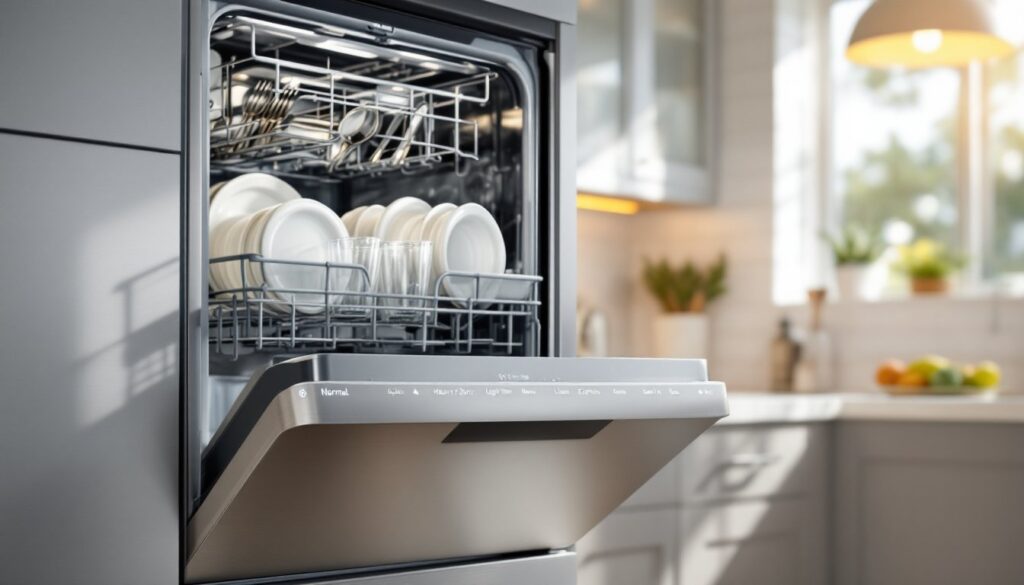
Staring at the control panel on a GE dishwasher can feel like decoding mission control, especially when the dishes are stacked and someone’s waiting for the good pasta bowls. Each cycle name sounds important, but what’s the real difference between “Normal” and “Light Wash,” and when should anyone actually use “Sanitize”? Understanding what each cycle does, how long it runs, and what kind of load it’s built for makes the difference between sparkling glassware and a second wash. This guide breaks down every standard cycle on GE dishwashers, explains the mechanics behind them, and helps homeowners match the right setting to their mess.
Table of Contents
ToggleKey Takeaways
- GE dishwasher cycles adjust water temperature, wash time, and spray intensity to match soil levels, with Normal Wash balancing cleaning power and efficiency for everyday loads between 90–120 minutes.
- Heavy Duty and Pots & Pans cycles use 150–160°F water and run 2.5–3.5 hours to tackle baked-on and greasy residue, but should be reserved for genuinely stubborn dishes to avoid wasting energy on lightly soiled items.
- Light Wash and Express cycles cut runtime to 30–90 minutes and reduce water/energy use by 30–40%, making them ideal for pre-rinsed dishes or lightly soiled glassware, though they cannot handle dried-on food effectively.
- Specialty GE dishwasher cycles serve distinct purposes: China/Crystal protects fragile items, Rinse Only holds dishes temporarily, and Sanitize reaches 150°F+ to kill 99.9% of bacteria for baby items and food prep tools.
- Matching cycle selection to dish type and soil level, plus proper load placement and regular filter maintenance, prevents residue and spotting while extending dishware lifespan and lowering utility costs.
- When uncertain, start with Normal Wash or use Auto/Sensor Wash options, which adjust settings based on detected soil level and eliminate guesswork for optimal cleaning results.
Understanding How GE Dishwasher Cycles Work
GE dishwashers use a combination of water temperature, wash time, and spray intensity to clean dishes. Each cycle adjusts these three variables to match the soil level and dish type.
Most cycles follow a basic sequence: pre-rinse, main wash, rinse, and final rinse or dry. The pre-rinse loosens food particles, the main wash uses heated water and detergent to scrub, and the rinses flush away residue. Some cycles add extra rinses or extend heating times for tougher jobs.
Water temperature matters more than most people realize. Normal cycles typically heat water to around 120-140°F, while Heavy Duty pushes it closer to 150-160°F. Higher temps break down grease and baked-on food more effectively, but they also use more energy.
Spray arm speed and pattern also shift between cycles. Heavier settings increase water pressure and extend the duration of spray bursts, while lighter cycles reduce both to conserve water and energy. GE models with multiple spray arms coordinate timing to target different rack zones depending on the selected cycle.
Most modern dishwasher designs incorporate sensors that detect soil levels and adjust mid-cycle, but the baseline settings still depend on the cycle the user selects upfront.
Normal Wash Cycle: Your Everyday Workhorse
The Normal Wash cycle is the default for a reason, it handles the widest range of everyday loads without wasting time or water. Runtime typically falls between 90 and 120 minutes, depending on the model and water heating requirements.
This cycle works well for plates, bowls, cups, and utensils with average food residue: sauce smears, light grease, dried cereal, or coffee stains. It won’t tackle burnt casserole dishes or lasagna pans, but it clears most dinner aftermath without a pre-rinse at the sink.
Water temperature on Normal Wash usually reaches 130-140°F, hot enough to activate detergent enzymes and dissolve fats. GE dishwashers with a built-in heating element will extend the cycle slightly if the incoming water isn’t hot enough, which is common in homes with lower water heater settings (below 120°F).
Energy use sits in the middle range, more than Express or Light Wash, but significantly less than Heavy Duty. For households running the dishwasher daily, Normal Wash strikes a balance between cleaning power and utility cost.
If dishes come out with spots or film, the issue usually isn’t the cycle, it’s hard water, old detergent, or a clogged spray arm. Check the rinse aid dispenser and clean the filter before switching to a more aggressive setting.
Heavy Duty and Pots & Pans Cycles: Tackling Tough Messes
Heavy Duty (or Pots & Pans on some GE models) is the cycle for dishes that put up a fight: baked-on cheese, caramelized sugar, roasting pans with carbonized drippings, or anything that’s been sitting overnight.
This cycle cranks up the heat, extends wash time, and increases spray intensity. Expect runtimes between 2.5 and 3.5 hours, significantly longer than Normal Wash. Water temperature climbs to 150-160°F, which is crucial for breaking down proteins and fats that bond to cookware at high heat.
The extended duration includes multiple wash phases. Instead of a single main wash, Heavy Duty may run two or three wash cycles with fresh detergent and hotter water each time. This staged approach loosens layers of grime without requiring manual scrubbing beforehand.
Heavy Duty uses the most water and energy of any standard cycle. It’s not a daily driver, reserve it for genuinely stubborn loads. Running it on lightly soiled dishes wastes resources and can actually cause problems: too much heat on delicate glassware or plastics may lead to warping or cloudiness.
Before loading, scrape off large food chunks. Heavy Duty isn’t a garbage disposal, solid debris can clog the filter and reduce cleaning performance. Position large pots and pans on the bottom rack where spray intensity is highest, and avoid overcrowding.
Light Wash and Express Cycles: Quick and Efficient Cleaning
Light Wash and Express (also called Quick Wash or 1-Hour Wash) are built for speed and efficiency, not heavy lifting. These cycles shine when dishes are lightly soiled or already rinsed.
Light Wash typically runs 60-90 minutes and uses lower water temperatures (around 100-120°F). It’s ideal for glassware, lightly used plates, or dishes that just need a freshening up before guests arrive. Energy and water use drop by roughly 30-40% compared to Normal Wash.
Express or Quick Wash completes in 30-60 minutes, making it the fastest option on the panel. But, it trades thoroughness for speed. Water doesn’t heat as high, and the wash phase is abbreviated. This cycle works well for pre-rinsed dishes, party prep, or items that only touched dry snacks or beverages.
Neither Light Wash nor Express handles dried-on food or greasy residue effectively. Running these cycles on dirty dishes usually results in a second wash, which defeats the purpose. They’re best used in combination with a solid scrape or rinse at the sink.
Express cycles also may skip or shorten the heated dry phase. Dishes often come out damp, so cracking the door after the cycle ends helps moisture evaporate without leaving spots. Many appliance testing labs recommend Light or Express cycles for energy-conscious households that wash dishes twice daily.
Specialty Cycles: China, Rinse, and Sanitize Options
GE dishwashers often include a few specialty cycles designed for specific needs. China/Crystal, Rinse Only, and Sanitize each serve distinct purposes.
China/Crystal (or Delicate) uses gentler water pressure and lower temperatures to protect fragile items. Runtime usually mirrors Normal Wash, but spray intensity drops to prevent chipping or etching on fine glassware and hand-painted dishes. This cycle is a must for heirloom china, thin wine glasses, or anything with gold trim.
Rinse Only (sometimes labeled Rinse & Hold) is a short cycle, around 10-15 minutes, that sprays dishes with cold water to prevent food from drying and hardening. It’s not a substitute for a full wash: think of it as a holding pattern until the dishwasher is full enough to justify running a complete cycle. Rinse Only uses minimal water and no detergent, making it useful for extended weekends or when loads build slowly.
Sanitize is an optional add-on or standalone cycle that boosts final rinse temperature to 150°F or higher, meeting NSF/ANSI Standard 184 for residential dishwasher sanitization. This setting kills 99.9% of bacteria, which is especially important for baby bottles, cutting boards, or dishes used by anyone with a compromised immune system. Sanitize adds 10-20 minutes to the cycle and increases energy use, but the payoff is verified disinfection.
Some GE models also feature Steam Prewash or Bottle Wash cycles. Steam loosens stubborn residue before the main wash, while Bottle Wash uses targeted jets to clean narrow openings. Check the user manual to see which specialty cycles are available on a specific model.
Choosing the Right Cycle for Your Dishes
Matching the cycle to the load saves time, water, and wear on dishes. Here’s a quick decision tree:
- Normal Wash for everyday mixed loads with average food residue.
- Heavy Duty or Pots & Pans for baked-on, greasy, or heavily soiled cookware.
- Light Wash for lightly soiled dishes that have been rinsed or wiped.
- Express or Quick Wash for pre-rinsed items or fast turnaround.
- China/Crystal for fragile glassware, fine china, or delicate items.
- Rinse Only to hold dishes until the load is full.
- Sanitize when disinfection is a priority, baby items, illness recovery, or raw meat prep tools.
Avoid over-cycling. Running Heavy Duty on a lightly soiled load wastes energy and can damage delicate items. Similarly, using Express on greasy pots leaves residue and requires a second wash.
Load placement also affects results. Place heavily soiled items on the bottom rack where water pressure is strongest. Glasses and plastics go on the top rack, which receives gentler spray. Angle bowls and cups downward so water drains instead of pooling.
Maintenance plays a supporting role. Clean the filter monthly, check spray arms for clogs, and keep the rinse aid dispenser filled. Even the best cycle can’t compensate for a dirty machine. Homes with hard water benefit from using a water softening solution or adding a rinse aid, which prevents mineral buildup and spotting.
When in doubt, start with Normal Wash. It’s designed to handle the broadest range of loads without requiring guesswork. Most modern GE dishwashers include Auto Cycle or Sensor Wash options that adjust settings based on soil level, taking the decision out of the user’s hands entirely.
Conclusion
Dishwasher cycles aren’t marketing gimmicks, they’re engineered combinations of heat, time, and water pressure designed to match specific cleaning challenges. Using the right cycle for the load at hand improves results, extends the life of dishes, and keeps utility bills in check. When the control panel makes sense, the dishes come out clean the first time.