Choosing bathroom paint colors isn’t just about aesthetics, it’s about engineering a space that handles humidity, resists mildew, and still looks sharp after years of steam and splashes. Unlike living rooms or bedrooms, bathrooms demand paints and color choices that perform under pressure. The wrong shade can make a small powder room feel like a closet, while the right one can turn a cramped half-bath into something surprisingly inviting. This guide covers the best bathroom paint colors for 2026, including warm bathroom paint colors, trending bathroom color schemes, and practical advice for matching paint to your bathroom’s size, lighting, and finish requirements.
Table of Contents
ToggleKey Takeaways
- Bathroom paint colors must resist humidity and mildew while looking great; satin and semi-gloss finishes outperform flat options in high-moisture environments.
- Light and reflective bathroom paint colors work best in small, poorly-lit spaces, while larger bathrooms can support bold, dark shades or accent walls without feeling cramped.
- Warm neutrals like Sherwin-Williams Accessible Beige and pale blues like Sea Salt are trending bathroom paint colors for 2026 that balance aesthetics with practical maintenance.
- Paint color perception depends on lighting type and direction—warm bulbs (2700K-3000K) enhance warm tones while cool daylight (5000K+) makes blues and greens appear crisper.
- Always test bathroom paint color samples on at least two walls under actual lighting conditions throughout the day before committing to a full repaint.
- Quality surface prep with stain-blocking primer is essential; apply two coats of finish paint for even coverage and better moisture resistance in humid bathrooms.
Why Paint Color Matters More in Bathrooms Than Other Rooms
Bathrooms operate in their own microclimate. High humidity, frequent temperature swings, and direct water exposure mean paint has to do more than just look good. The color choice affects how well the space handles moisture, how clean it appears, and whether the room feels cramped or breathable.
Dark colors can hide water spots and soap scum better than stark white, but they also absorb light, a problem if you’re working with a windowless or poorly lit space. Light colors reflect available light and make small bathrooms feel larger, but they show every drip and fingerprint. Bathroom color schemes need to balance visual appeal with practical maintenance.
Tile, grout, and fixture colors lock you into certain directions. If you’ve got white subway tile and chrome fittings, warm bathroom paint colors like soft terracotta or beige can add depth without clashing. If your vanity is dark wood and the tile is gray, cooler tones, slate blue, sage green, tie the palette together. Paint is the easiest element to change, but it still needs to work with the permanent fixtures you’re not replacing.
Ventilation matters too. Bathrooms with exhaust fans rated at least 50 CFM for spaces under 100 square feet (per IRC guidelines) handle moisture better, which means your paint job lasts longer regardless of color. If your fan is undersized or nonexistent, expect faster mildew growth, especially in corners and along the ceiling line.
Top Bathroom Paint Colors for 2026
Calming Blues and Greens for a Spa-Like Retreat
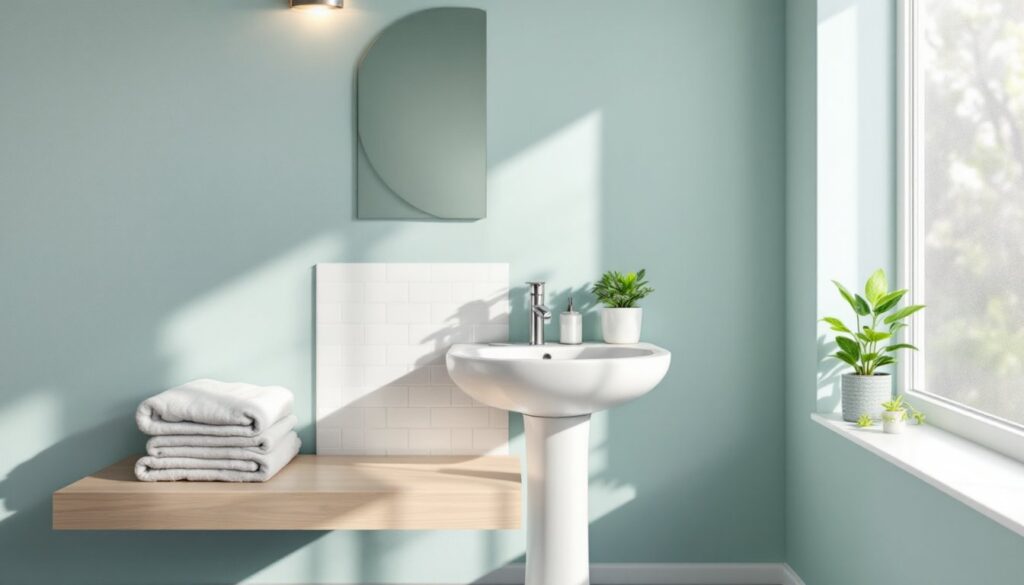
Blues and greens remain among the best bathroom paint colors because they evoke water, sky, and natural calm. They’re forgiving under varied lighting and pair well with white fixtures and natural wood accents.
Sherwin-Williams Sea Salt (SW 6204) is a soft blue-green that reads differently depending on the light, sometimes more green, sometimes more gray. It’s a go-to for small bathroom paint colors because it doesn’t overwhelm tight quarters. Another solid choice is Sherwin-Williams Rainwashed (SW 6211), which leans slightly greener and works well in bathrooms with warm wood tones.
For deeper, moodier spaces, Hague Blue (Farrow & Ball) or Sherwin-Williams Naval (SW 6244) deliver drama without feeling heavy, especially when balanced with white trim and plenty of task lighting. These shades work best in larger bathrooms or powder rooms where you want a statement wall.
Pale aquas and seafoam tones, think Benjamin Moore Palladian Blue (HC-144) or Sherwin-Williams Tradewind (SW 6218), are trending bathroom paint colors for 2026. They bring a coastal, airy vibe without the cliché of pure turquoise. Designers featured in curated bathroom color collections often pair these shades with brass hardware and natural fiber accents for a contemporary look.
Warm Neutrals That Add Depth and Sophistication
Warm neutrals have replaced cool grays as the dominant neutral palette in 2026. Sherwin-Williams Accessible Beige (SW 7036), Kilim Beige (SW 6106), and Balanced Beige (SW 7037) are all excellent paint colors for a bathroom that needs warmth without going full-on tan.
These shades work especially well in bathrooms with limited natural light. They reflect warmth from incandescent or warm LED bulbs (aim for 2700K-3000K color temperature) and make the space feel cozy rather than clinical.
Off-whites with warm undertones, Sherwin-Williams Alabaster (SW 7008) or Benjamin Moore White Dove (OC-17), are versatile small bathroom Sherwin Williams bathroom paint colors that brighten without the starkness of pure white. They’re forgiving with grout lines, don’t show water spots as readily, and pair with virtually any accent color.
For a bolder take on warm neutrals, terracotta and clay tones are gaining traction. Sherwin-Williams Cavern Clay (SW 7701) or softer peachy tones like Benjamin Moore Georgia Pink (2092-60) add character to powder rooms and guest baths. These shades are excellent bathroom paint color ideas for spaces where you want personality but not overwhelming color.
How to Choose the Right Paint Finish for Bathroom Walls
Finish matters as much as color in bathrooms. The wrong sheen traps moisture, shows imperfections, and makes cleaning harder.
Satin and semi-gloss finishes are the standard for bathroom walls. Satin (also called eggshell by some brands) has a subtle sheen that resists moisture and wipes clean without looking too shiny. Semi-gloss is tougher and more water-resistant, making it ideal for high-splash zones like shower surrounds (if you’re painting rather than tiling) and behind sinks.
Flat or matte finishes are generally a bad call in bathrooms. They absorb moisture, show water spots, and don’t clean well. If you’re set on a matte look for aesthetic reasons, use a specialty bathroom paint formulated with mildew inhibitors, brands like Benjamin Moore Aura Bath & Spa or Sherwin-Williams Emerald Interior offer matte formulations designed for humid spaces.
High-gloss finishes are rare on walls but work well on trim, doors, and cabinets. They’re extremely durable and easy to scrub, but they also highlight every surface flaw. If your drywall isn’t perfectly smooth, high-gloss will advertise every ding and seam.
When prepping for paint, use a stain-blocking primer like Zinsser B-I-N or Kilz Premium. This seals existing stains, blocks tannins from wood knots, and gives the topcoat better adhesion. If you’re painting over darker colors or covering mildew stains, a bonding primer is non-negotiable. Plan on two coats of finish paint for even coverage, especially with lighter paint color ideas for bathroom spaces.
Matching Paint Colors to Your Bathroom Size and Lighting
Small bathrooms (under 40 square feet) benefit from light, reflective paint colors. Whites, soft grays, pale blues, and warm beiges bounce available light and prevent the space from feeling claoked. If your small bathroom has no window, avoid dark or saturated colors unless you’re prepared to add serious task lighting, aim for at least 75-100 lumens per square foot in enclosed bathrooms.
That said, small doesn’t always mean light. A powder room with good lighting can handle a bold, dark color because guests spend limited time there. Deep greens, charcoal, or even black can make a tiny powder room feel intentional and designed rather than cramped. Just make sure your lighting is bright enough, install sconces flanking the mirror and consider a ceiling fixture rated for damp locations.
Larger bathrooms have more flexibility. You can use darker trending bathroom paint colors or create an accent wall behind the vanity or tub without overwhelming the space. Two-tone paint schemes, such as a darker lower wall with wainscoting and a lighter upper wall, add architectural interest and can make a large bathroom feel more proportioned.
Lighting type affects color perception. Cool daylight bulbs (5000K+) make blues and greens look crisp but can make warm neutrals look dingy. Warm bulbs (2700K-3000K) enhance beiges and terracottas but can muddy cooler tones. Test paint samples under your actual bathroom lighting, paint a 2′ x 2′ section on at least two walls and observe it at different times of day and with artificial light on. Home remodel inspiration and design sourcebooks often recommend this approach to avoid costly repaints.
If your bathroom has a window, consider how exterior light changes throughout the day. North-facing windows bring cool, even light that can make warm colors look flat. South-facing windows bring warm, intense light that can wash out pale colors. Paint samples are cheap: repainting an entire bathroom because the color looks wrong is not.
Conclusion
Selecting bathroom paint colors comes down to balancing aesthetics with durability and light management. Stick with moisture-resistant finishes, test samples under actual lighting conditions, and don’t skip surface prep, most paint failures start with rushed prep, not bad color choices. Whether you’re drawn to serene blues, warm neutrals, or bold accent walls, the right paint color can turn a purely functional bathroom into a space that feels finished and intentional.