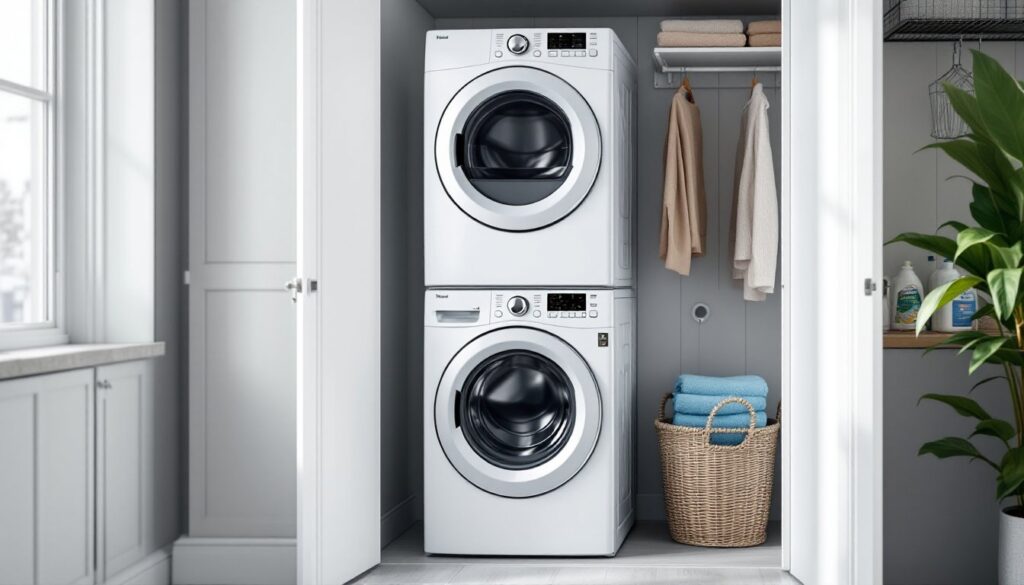
Living in a condo, apartment, or just dealing with a tight laundry closet? A Whirlpool stackable washer and dryer can be the difference between squeezing laundry into your day and letting it pile up for a week. These vertical units deliver full-size cleaning power without eating up floor space, making them the go-to choice for homeowners who need efficient laundry without sacrificing a spare bedroom. Whirlpool’s reputation for reliability meets smart engineering in their stackable lineup, offering front-load performance, intuitive controls, and features that actually make sense. This guide walks through what sets Whirlpool apart, which models are worth your time, and how to install and maintain them for years of hassle-free use.
Table of Contents
ToggleKey Takeaways
- A Whirlpool stackable washer and dryer cuts floor space in half compared to side-by-side units while delivering full-size cleaning power with capacities of 4.5–5.0 cubic feet for washers and 7.0+ cubic feet for dryers.
- The WFW6620HW and WED6620HW models offer the best balance of features, capacity, and price ($1,800–$2,100), while budget options like the WFW5620HW/WED5620HW pair start at $1,200–$1,500 without smart connectivity.
- Proper installation requires a dedicated 240V electrical circuit for electric dryers, rigid metal venting with a maximum 25-foot run, and careful leveling to prevent vibration and premature wear.
- Regular maintenance—including monthly tub cleaning, quarterly drain filter checks, and annual vent duct cleaning—extends the lifespan to a decade or more and prevents costly repairs.
- Whirlpool outperforms LG, Samsung, GE, and Bosch in value and service availability, making it the safer choice for homeowners who prioritize reliability and parts accessibility over premium features.
Why Choose a Whirlpool Stackable Washer and Dryer?
Space efficiency is the obvious win. A Whirlpool washer and dryer set in a stacked configuration takes up roughly 27 inches of width and 30 inches of depth, half the footprint of a side-by-side pair. That frees up square footage for shelving, a folding station, or just breathing room in a cramped utility closet.
Whirlpool’s front load washer and dryer models are engineered for vertical stacking without compromising capacity. Most units handle 4.5 to 5.0 cubic feet in the washer and 7.0+ cubic feet in the dryer, enough for king-size comforters and weekly loads for a family of four. You’re not sacrificing performance for space.
Reliability matters when you’re stacking appliances. Whirlpool uses direct-drive motors and galvanized steel drums in their mid-range and premium models, which reduces vibration and wear. Their warranty coverage (typically one year parts and labor, with extended options for the drum and motor) is straightforward and backed by a widespread service network.
Noise levels are another practical consideration. Whirlpool’s stackable washer dryer units with advanced vibration control keep decibel levels below 50 dB during the spin cycle, quieter than a normal conversation. That’s critical if your laundry closet shares a wall with a bedroom or office.
Finally, Whirlpool integrates genuinely useful tech without the gimmicks. Their washer and dryer whirlpool sets often include Load & Go dispensers (holds detergent for up to 20 loads), steam refresh cycles, and app connectivity for cycle alerts. These aren’t flashy extras, they’re time-savers that make daily laundry less of a chore.
Top Whirlpool Stackable Models for 2026
The WFW6620HW washer paired with the WED6620HW electric dryer represents Whirlpool’s sweet spot for 2026. The 4.5 cu. ft. washer offers 36 wash cycles, including a quick 15-minute refresh and a heavy-duty cycle for work clothes. The 7.4 cu. ft. dryer includes moisture sensing and a Wrinkle Shield option that tumbles clothes periodically for up to 150 minutes after the cycle ends. Expect to pay around $1,800–$2,100 for the pair (prices vary by region and retailer promotions).
For budget-conscious buyers, the WFW5620HW washer and WED5620HW dryer deliver solid performance without smart features or steam functions. The 4.5 cu. ft. washer has 12 cycles, and the 7.0 cu. ft. dryer uses timed drying with three heat settings. This whirlpool washer dryer set typically runs $1,200–$1,500 and is a reliable workhorse if you don’t need app control.
Whirlpool’s premium WFW9620HBK all-in-one washer dryer combo is a single unit that washes and dries in the same drum. It’s ventless, making it ideal for apartments without dryer venting. Capacity is smaller (2.4 cu. ft.), and cycle times are longer (a full wash-dry run takes 4–5 hours), but it’s the ultimate space-saver for studio apartments or RVs. Pricing hovers around $1,600–$1,900.
Many retailers offer whirlpool washer and dryer set sale events during holiday weekends (Memorial Day, Labor Day, Black Friday), where you can save $200–$400 on pairs. Always compare extended warranty costs, third-party plans sometimes offer better coverage than manufacturer add-ons.
Key Features to Look For
Load capacity is non-negotiable. Don’t assume all front-loaders are the same size. A 4.3 cu. ft. washer is adequate for two people: 4.5+ cu. ft. handles families. Match the dryer capacity to at least 1.5x the washer size to ensure even drying without overloading.
Stacking kits are required for safe installation. Whirlpool includes a kit with some models, but not all. The kit uses brackets and straps to secure the dryer to the washer, preventing shifts during the spin cycle. Aftermarket kits work, but verify compatibility with your exact model numbers before buying.
Vibration control separates good stackables from nightmare units. Look for Whirlpool’s Advanced Vibration Control or similar branding. This typically involves suspension rods, dampers, and a solid mounting system. Units without this will shake, rattle, and drift across the floor, especially on upper floors or over crawlspaces.
Moisture sensors in the dryer save energy and prevent over-drying. Whirlpool’s mid-range and premium dryers use dual sensors that monitor humidity and temperature. Timed drying is fine for towels and jeans, but sensor drying is essential for mixed loads and delicate fabrics.
Reversible doors on front-load washers let you adapt to your closet layout. Not all Whirlpool models offer this, so check specs if your space requires a left-hand swing. The dryer door is almost always reversible.
Smart features like app connectivity and remote start sound convenient, but they require a stable Wi-Fi signal in your laundry area. If your closet is in a basement dead zone, save the $100–$200 premium and stick with a non-connected model.
Installation Requirements and Space Planning
Measure the installation space before ordering. A standard whirlpool stacked washer and dryer needs a minimum of 27 inches wide, 32 inches deep, and 75–80 inches tall (including the stacking kit). Add 1 inch on each side for ventilation and 6 inches behind the unit for hoses and ductwork. Many closets are 30–36 inches wide, which is adequate, but verify clearances for door swing and access panels.
Electrical requirements differ for gas vs. electric dryers. Electric dryers need a dedicated 240V, 30-amp circuit with a 4-prong outlet (NEMA 14-30R). Gas dryers use a standard 120V, 15-amp outlet but require a natural gas or propane line. Confirm your setup before delivery, running new circuits or gas lines isn’t a DIY job unless you’re licensed. Expect to pay $150–$400 for an electrician to install a 240V circuit if one doesn’t exist.
Venting is critical for dryer performance. Most Whirlpool dryers require a 4-inch rigid or semi-rigid duct with a maximum run of 25 feet (subtract 2.5 feet for each 90-degree elbow). Flexible foil ducts are code violations in many jurisdictions and a fire hazard. Use smooth metal ductwork and minimize bends. If venting isn’t possible, consider a whirlpool all in one washer dryer ventless combo.
Water supply lines should be braided stainless steel, not rubber. Rubber hoses can burst under pressure. Install a drip pan under the washer if it’s on an upper floor or over finished space. A pan with a drain connection prevents water damage if a hose fails.
Leveling the washer is non-negotiable. Use a 4-foot level and adjust the front leveling feet until the unit is perfectly plumb side-to-side and front-to-back. An unlevel washer will vibrate, walk, and wear out suspension components prematurely. Lock the feet with a wrench once adjusted.
Most manufacturers void warranties if you don’t use their stacking kit or if installation isn’t done per the manual. Read the fine print. If you’re uncomfortable with plumbing, electrical, or leveling work, hire a pro, delivery and installation packages typically run $100–$200 and include haul-away of your old units.
Maintenance Tips to Extend Your Unit’s Lifespan
Clean the washer gasket after every use. Front-load washers trap moisture and detergent residue in the rubber door seal. Wipe it down with a dry cloth to prevent mold and mildew. Once a month, run a Tub Clean cycle with an affresh tablet or a cup of white vinegar (no detergent, no clothes). This flushes out buildup in the drum and drain pump.
Check and clean the drain pump filter every three months. It’s located behind a small access panel at the base of the washer. Place a shallow pan underneath, unscrew the filter, and remove lint, coins, and debris. A clogged filter causes slow draining, error codes, and foul odors.
Inspect the dryer lint trap before every load. A full lint screen reduces airflow, extends drying time, and is a fire hazard. Once a month, wash the screen with warm soapy water to remove fabric softener residue that clogs the mesh. While you’re at it, vacuum out the lint trap housing with a crevice tool.
Clean the dryer vent duct annually. Disconnect the dryer, remove the duct, and use a dryer vent brush kit (available at any hardware store for $15–$25) to scrub out lint buildup. A clogged vent causes overheating, longer cycle times, and potential fires. If your duct run is longer than 15 feet or has multiple bends, consider hiring a vent cleaning service every 12–18 months.
Use HE detergent in front-load washers. Regular detergent creates excess suds that can damage the pump and leave residue. HE (high-efficiency) formulas are concentrated and low-sudsing. Follow the manufacturer’s dosage recommendations, more detergent doesn’t mean cleaner clothes, just more buildup.
Inspect hoses annually. Replace washer supply hoses every five years, even if they look fine. Burst hoses cause thousands of dollars in water damage. Check the dryer vent connection for gaps or tears, and replace the duct if it’s crushed or kinked.
Leave the washer door ajar between loads. This allows the drum and gasket to dry, reducing mold growth. It’s a simple habit that extends the life of the door seal and keeps the machine smelling fresh.
Comparing Whirlpool to Other Stackable Brands
Whirlpool vs. LG: LG’s stackable front-loaders often win on features, think AI fabric sensing, TurboWash (cuts 20 minutes off cycle times), and quieter operation. But LG’s proprietary service parts and higher upfront costs ($2,000–$2,800 for comparable pairs) tilt the value equation toward Whirlpool for most homeowners. LG’s compressor-based heat pump dryers are more energy-efficient but also more expensive to repair.
Whirlpool vs. Samsung: Samsung stackables look sleek and offer large capacities (up to 5.0 cu. ft. washers). Smart features are robust, but reliability reports from consumer testing labs show higher service call rates for Samsung compared to Whirlpool. If you value proven dependability over cutting-edge tech, Whirlpool edges ahead. Samsung’s AddWash door (lets you toss in forgotten items mid-cycle) is a nice touch, though.
Whirlpool vs. GE: GE Appliances (now owned by Haier) competes directly in price and features. Their stackable options perform similarly to Whirlpool’s mid-range models. The tie-breaker is often service availability, Whirlpool has a broader authorized repair network in many regions, which matters when you need a part fast.
Whirlpool vs. Bosch: Bosch’s compact 24-inch stackables fit ultra-tight spaces but sacrifice capacity (2.2 cu. ft. washers). They’re European-engineered, quiet, and efficient, but cycle times are longer (90+ minutes for a normal wash). Whirlpool’s 27-inch whirlpool top load washer and dryer models offer more capacity and faster cycles, though they don’t stack as compactly.
For homeowners prioritizing service network coverage and parts availability, Whirlpool and GE are the safest bets. If you’re drawn to premium features and are willing to pay for them, LG and Samsung deliver, just budget for potentially higher repair costs down the line. Smart home product reviews often highlight connectivity and app features, but real-world reliability trumps gadgets when your laundry piles up and the machine’s down.
Conclusion
A whirlpool stackable washer dryer delivers reliable, space-efficient laundry without the compromises that plagued older compact units. Whether you’re outfitting a condo, upgrading a rental property, or reclaiming floor space in a crowded utility room, Whirlpool’s lineup balances performance, price, and serviceability better than most competitors. Measure carefully, install correctly, and maintain regularly, do that, and you’ll get a decade or more of trouble-free use. For detailed product comparisons and real-world testing, check independent reviews before pulling the trigger on any model.