Rolling office chairs are hard on floors. Period. Whether you’re working from home or outfitting a dedicated office, those casters are grinding dirt into carpet fibers or scratching hardwood with every swivel and scoot. An office chair mat isn’t glamorous, it won’t show up on design blogs, but it’s one of those unsexy fixes that saves you from costly floor refinishing or carpet replacement down the line. This guide walks through what you actually need to know: which mat works for your floor type, how to size it correctly, and what materials hold up versus those that crack in six months. No fluff, just practical specs and real-world advice.
Table of Contents
ToggleKey Takeaways
- An office chair mat protects floors from damage caused by rolling casters and improves chair mobility, making it essential for home offices and dedicated workspaces to avoid costly repairs.
- Choose a hard floor chair mat for wood, laminate, or vinyl surfaces with a smooth underside, and a carpet mat with cleats for carpeted areas, sized 2.5mm–4mm thick depending on pile height.
- Polycarbonate office chair mats cost more ($80–$200+) but outlast budget PVC options by years, making them the better investment for long-term floor protection on hardwood and engineered flooring.
- Measure your chair’s roll zone and add 6–8 inches on all sides when selecting size to prevent mat edges from cracking and floor damage beyond the mat’s perimeter.
- Before installation, clean your floor thoroughly, let the mat acclimate to room temperature for 24 hours, and ensure carpet mat cleats are firmly anchored to prevent sliding and uneven wear.
- A properly maintained office chair mat lasts 3–7 years and pays for itself by preventing expensive floor refinishing or carpet replacement that can cost $500 or more.
What Is an Office Chair Mat and Why Do You Need One?
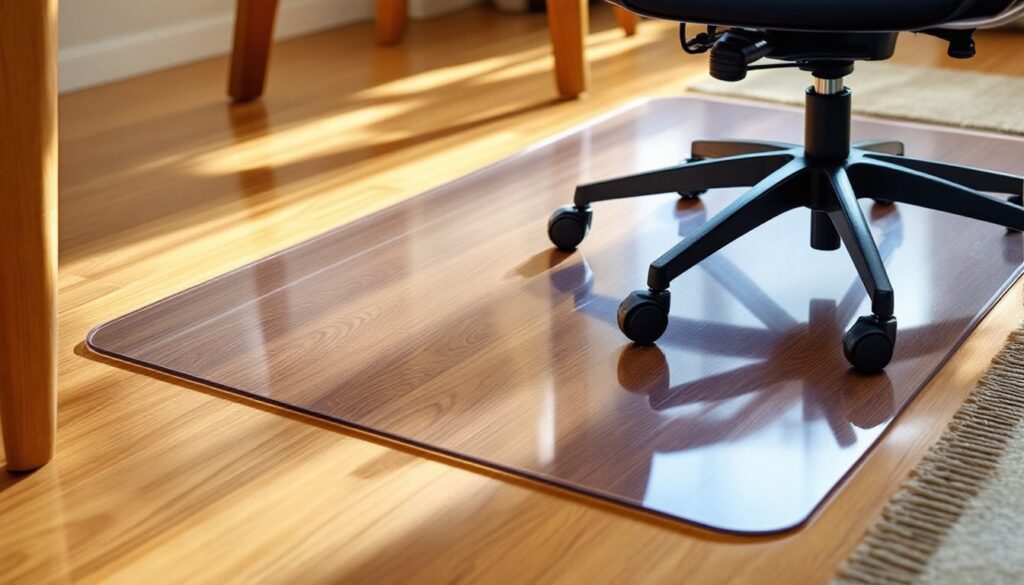
An office chair mat (also called a floor mat for office chair or office chair floor protector) is a rigid or semi-rigid protective surface placed under a rolling office chair. It serves two purposes: protecting the floor beneath and improving chair mobility.
Without a mat, chair casters act like tiny millstones. On carpet, they compress pile, create traffic paths, and grind dirt deeper into fibers, damage you can’t vacuum away. On hardwood, laminate, or vinyl, metal or plastic wheels leave scratches, scuffs, and eventually gouges that require sanding or plank replacement. Both scenarios are expensive fixes.
A quality office chair roller mat creates a smooth, low-friction surface that lets the chair glide with less effort while distributing weight evenly. This isn’t about aesthetics, it’s about avoiding a $500+ floor repair bill or early carpet replacement. If you spend more than an hour a day in a rolling chair, a mat is cheap insurance.
When to skip it: If you’re using a stationary task chair with glides instead of casters, or working on commercial-grade tile that’s already rated for heavy traffic, you can probably get away without one. For everyone else, it’s a must-have.
Types of Office Chair Mats for Different Flooring
Not all mats work on all floors. Use the wrong type and you’ll either damage your floor or end up with a mat that cracks under load.
Hard Floor Chair Mats
Hard floor mats are designed for wood, laminate, vinyl, tile, and other smooth surfaces. They typically have a smooth bottom to prevent scratching and may include small rubber grips or a textured underside to keep them from sliding.
Key features:
- Thickness: Usually 1.5mm to 2.5mm thick. Thinner than carpet mats because they don’t need to bridge pile.
- Material: Polycarbonate or PVC. Polycarbonate is more durable but costs more.
- Smooth underside: No cleats, grippers, or studs that could scratch.
Don’t use a carpet mat on hardwood. The cleats will gouge the finish, and you’ll spend more fixing it than you saved buying the wrong mat.
Carpet Chair Mats
Carpet mats (office chair mat for carpet, office chair pad for carpet, or office chair mat for carpeted floor) are thicker and feature cleats or grippers on the underside to anchor into carpet pile and prevent sliding.
Key specs:
- Thickness: Typically 2.5mm to 4mm for low-pile carpet (less than ½” pile height). For medium to high-pile (½” to ¾”), look for mats rated for that depth.
- Cleats: Short spikes or raised nubs that grip without tearing fibers. Spacing and length matter, too aggressive and they’ll damage backing: too shallow and the mat slides.
- Material: PVC is common and affordable. Polycarbonate lasts longer but costs 30–50% more.
Measure your carpet pile height before buying. Lay a ruler perpendicular to the floor and press it down to the backing. Most residential carpet is low-pile (⅜” or less). Plush or frieze styles may hit ¾”, which requires a heavier-duty office mat for chair.
One trick for low-budget setups: some users on design forums suggest swapping chair casters for carpet-rated rollers instead of using a mat. It works, but you lose the even weight distribution a mat provides.
Choosing the Right Size and Shape for Your Workspace
Office chair floor pads come in rectangular, T-shaped, and L-shaped configurations. Sizing is straightforward but easy to get wrong.
Rectangular mats are the most common. Standard sizes:
- 36″ × 48″ – Fits small desks or cubicles.
- 45″ × 53″ – Mid-size, suitable for most home office desks.
- 48″ × 60″ – Larger workspace with room to roll.
Measure your chair’s roll zone: sit at your desk and swivel/scoot through your typical range of motion. Add 6–8 inches on all sides to that footprint. If you’re hitting the edge of the mat constantly, it’s too small and you’ll either damage the floor beyond it or develop a lip where mat meets carpet.
T-shaped and L-shaped mats include an extended section to protect the floor under your feet. Useful if you don’t use a footrest or if you’re on carpet and want consistent firmness underfoot. They’re bulkier to install and cost 20–40% more, but they cover more real estate.
Thickness vs. carpet pile:
- Low-pile (< ½”): 2mm to 3mm mat works fine.
- Medium-pile (½” to ¾”): 3mm to 4mm recommended. Thinner mats will flex and crack.
- High-pile or shag (> ¾”): Consider a chair mat with a reinforced base or switch to hard casters and skip the mat. High-pile and mats don’t play well together.
If your desk sits on an area rug over hardwood, measure carefully. You may need two mats (one rated for hard floor, one for carpet) or reposition the rug entirely. Mixing surfaces under one mat invites uneven wear and cracking.
Material Options: Pros and Cons of Each Type
The material dictates durability, cost, and whether your office mat for rolling chair will last two years or ten.
Polycarbonate (PC):
- Pros: Extremely durable, resists cracking under load, stays clear (doesn’t yellow), handles temperature swings. Rated for 1,000+ lbs of rolling load in quality models.
- Cons: Costs $80–$200+ depending on size. Can be slippery on some hard floors without a textured underside.
- Best for: Long-term use, heavy users, or anyone who doesn’t want to replace a mat every couple of years. Worth it if you’re protecting hardwood or engineered flooring.
PVC (Polyvinyl Chloride):
- Pros: Affordable ($30–$80), widely available, decent lifespan on low-traffic setups.
- Cons: Yellows over time (especially in sunlight), cracks more easily under heavy or repeated use, some emit a chemical smell when new. Not as eco-friendly.
- Best for: Renters, budget builds, or short-term setups where you’ll replace flooring soon anyway.
Tempered glass:
- Pros: Sleek, modern look, extremely durable, easy to clean, won’t discolor. Popular among contemporary design enthusiasts.
- Cons: Heavy (30–50 lbs), expensive ($150–$300+), potential for chipping edges if mishandled, and cold underfoot in winter.
- Best for: Modern office aesthetics, hard floors only, and situations where appearance matters. Not practical for carpet.
Polypropylene and recycled materials:
- Pros: Eco-conscious, quieter rolling, often made from post-consumer content.
- Cons: Less durable than PC or glass, can warp or curl at edges, limited size options.
- Best for: Light-duty use, those prioritizing sustainability over longevity.
Thickness matters, too. Thin mats (under 2mm) are fine for hard floors, but they’ll crack on carpet. For carpeted surfaces, aim for at least 2.5mm. Reviews and testing from sources like Good Housekeeping consistently show that thicker polycarbonate mats outlast budget PVC by years.
One note on “eco-friendly” or “non-toxic” claims: some mats are labeled phthalate-free or BPA-free. If you’re sensitive to off-gassing or have kids crawling around, it’s worth checking. Otherwise, any reputable mat will meet basic safety standards.
Installation and Maintenance Tips for Longevity
Installation isn’t complicated, but skipping prep is how you end up with a warped mat or trapped dirt grinding into your floor.
Before you lay it down:
- Clean the floor thoroughly. Vacuum carpet multiple times to pull up embedded dirt. For hard floors, sweep and damp-mop. Any debris left underneath will create pressure points that indent or crack the mat.
- Let the mat acclimate. If it’s cold (shipping in winter, storage in a garage), let it sit at room temperature for 24 hours. Polycarbonate and PVC can be brittle when cold. Unroll it flat during this time to relax any curl.
- Position cleats correctly (carpet only). Lay the mat cleat-side down and press firmly to seat the grippers. Walk on it or roll your chair over it a few times to ensure it’s anchored.
Hard floor mats: Some come with adhesive strips or corner grips. Use them if the mat slides, but test placement first, adhesive can leave residue on finishes.
Daily/weekly maintenance:
- Wipe down weekly with a damp cloth or all-purpose cleaner. Dust and grime reduce rolling smoothness and scratch the mat surface.
- Vacuum under the mat monthly (carpet) or sweep (hard floors). Dirt migrates under edges and grinds in with chair movement.
- Check for cracks or curling edges every few months. Polycarbonate rarely cracks, but PVC will. Replace before the mat fails completely and exposes your floor.
What shortens mat life:
- Direct sunlight: UV yellows PVC and can make polycarbonate brittle over years. Use blinds or reposition if possible.
- Overloading: Most mats are rated for a 250 lb user + chair weight. Exceed that and you’ll see stress cracks.
- Rolling over edges repeatedly: Creates a lip, then a crack. Size your mat so you’re not constantly hitting the perimeter.
- Using the wrong casters: Metal casters wear mats faster. Swap to polyurethane or rubber if you’re chewing through mats.
Safety note: Mats with cleats or raised textures can be a trip hazard. If you have kids, elderly family, or mobility challenges in the home, choose a low-profile mat and consider beveled edges (most quality mats include this).
Disposal: PVC isn’t widely recyclable: check local programs. Polycarbonate and glass are easier to recycle but still require drop-off at specialty centers in most areas. If your mat lasted five years, disposal hassle is a fair trade-off.
A properly chosen and maintained office chair floor pad should last 3–7 years depending on material and use. That’s a small upfront cost compared to refinishing hardwood or replacing carpet.