If you’ve grabbed an Owala water bottle for its clever FreeSip lid or its vibrant powder-coated finish, you’ve probably wondered whether you can toss it in the dishwasher after a long day. It’s a fair question, hand washing every water bottle gets old fast, especially when you’re juggling dishes, meal prep, and general kitchen cleanup. The short answer: yes, but with important caveats. Owala bottles are partially dishwasher safe, meaning certain components can handle the heat and spray while others can’t. Knowing which parts go where, and why, will keep your bottle looking sharp and functioning smoothly for years. This guide walks through Owala’s official care instructions, breaks down what’s safe for the top rack, and covers the common pitfalls that lead to warped lids, faded finishes, and leaky seals.
Table of Contents
ToggleKey Takeaways
- Owala bottles are partially dishwasher safe—the lid, gaskets, and straw components can go on the top rack only, while the stainless steel body must be hand washed to preserve the vacuum seal and finish.
- Always place Owala parts on the dishwasher’s top rack, never the bottom, since lower temperatures exceed 160°F and can warp plastic, degrade silicone gaskets, and fade colored finishes.
- To properly clean your Owala in the dishwasher, disassemble all components, rinse visible residue, position parts upside down with space between them, use mild detergent, and select a normal cycle with air-drying.
- Hand washing the stainless steel bottle body after every use combined with weekly dishwasher cleaning of the lid balances convenience with longevity for optimal Owala bottle care.
- Inspect silicone gaskets regularly for cracks or stretching, as dishwasher detergent can accelerate wear over time, and replace them promptly to maintain a leak-free seal.
Understanding Owala’s Dishwasher Safety Guidelines
Owala explicitly states that all bottle components except the bottle body itself are dishwasher safe on the top rack only. The stainless steel body, whether it’s a 24 oz FreeSip or a 32 oz insulated tumbler, should always be hand washed. Why? The high heat and harsh detergents in dishwashers can compromise the vacuum seal between the double walls, reducing insulation performance and potentially causing the powder coating to fade, peel, or discolor.
The top-rack restriction isn’t arbitrary. Dishwasher heating elements sit at the bottom, and lower-rack temperatures often exceed 160°F, hot enough to warp plastic components, degrade silicone gaskets, and strip color from coated finishes. The top rack keeps parts farther from direct heat while still getting the spray and detergent action needed to remove residue.
Owala updated these guidelines in late 2025 after consumer feedback about lid durability and color retention. If you’ve seen older forum posts suggesting the entire bottle is dishwasher safe, disregard them. Stick with the manufacturer’s current recommendations to preserve your warranty and avoid premature wear.
Which Owala Parts Are Dishwasher Safe?
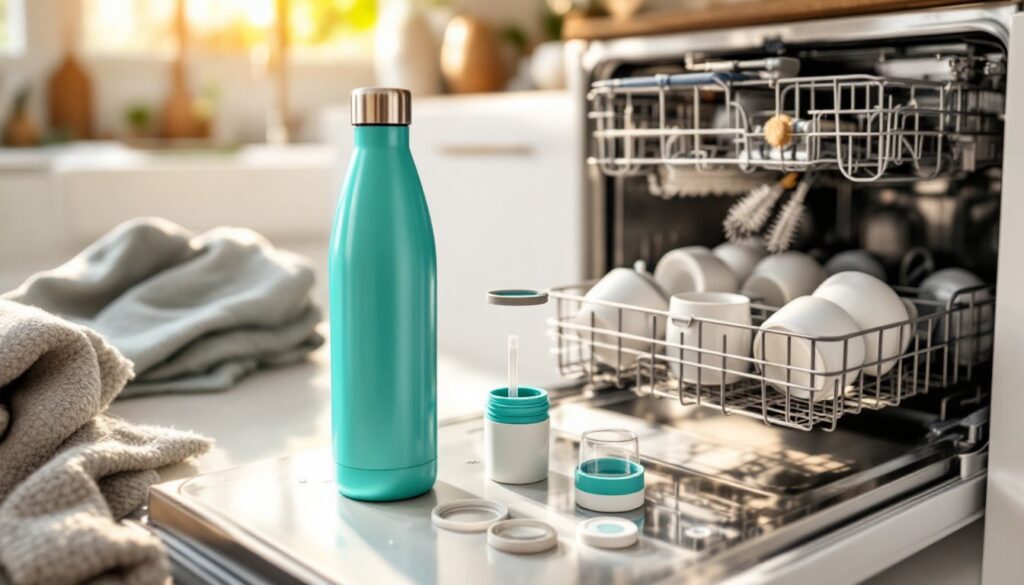
Breaking down your Owala bottle helps clarify what goes in the dishwasher and what stays out. Here’s the component-by-component rundown:
Top-Rack Dishwasher Safe:
• FreeSip lid assembly – The entire twist-off lid, including the built-in straw, sip spout, and locking mechanism, can go on the top rack. Make sure the lid is fully open so water reaches all interior surfaces.
• Silicone gaskets and seals – The rubber rings that create a watertight seal around the lid threads are dishwasher safe. But, high heat can accelerate wear, so inspect them regularly for cracks or stretching.
• Straw components – If your model has a removable straw or straw cap, these plastic pieces handle top-rack washing without issue.
Hand Wash Only:
• Stainless steel bottle body – The insulated chamber and powder-coated exterior require gentle hand washing with warm, soapy water. Use a bottle brush to reach the bottom, and avoid abrasive sponges that scratch the interior.
• Caps with electronics – Some limited-edition Owala models include temperature displays or LED indicators. These should never enter the dishwasher.
If you’re unsure whether a specific part is dishwasher safe, check the base of the component for a recycling symbol or care icon. Most dishwasher-safe plastics are marked with a “top rack safe” symbol.
Step-by-Step Guide to Cleaning Your Owala in the Dishwasher
Properly loading your Owala parts ensures they come out clean without damage. Follow these steps for best results:
1. Disassemble the lid completely. Twist off the FreeSip lid and separate any removable gaskets, straws, or small caps. The more you break it down, the better the water penetration and the lower the chance of trapped grime.
2. Rinse components under warm tap water. Remove visible residue, coffee stains, or protein shake buildup before loading. This prevents baked-on gunk from setting during the wash cycle.
3. Place all parts on the top rack. Position the lid upside down or angled so water drains freely. Avoid nesting parts inside each other, air and water need to circulate around every surface. Secure small gaskets in a dishwasher basket or silverware cage so they don’t fall through the rack onto the heating element.
4. Use a mild detergent without bleach or citric acid. Harsh formulas can degrade silicone and fade colored plastics over time. Standard liquid or powder dishwasher detergent works fine.
5. Select a normal or light wash cycle. Skip “sanitize” or “heavy” cycles that ramp up temperature. Standard cycles deliver enough heat and detergent to sanitize without pushing parts past their thermal tolerance.
6. Air-dry completely before reassembling. Once the cycle finishes, pull out all components and let them dry on a towel or drying rack. Reassembling while damp traps moisture, which promotes mildew and odors inside the lid mechanism.
Common Mistakes That Damage Owala Bottles in the Dishwasher
Even when you follow the basics, a few missteps can shorten your bottle’s lifespan. Here are the most frequent errors and how to avoid them:
Putting the stainless steel body in the dishwasher. This is the top mistake. The vacuum insulation depends on an airtight seal between the inner and outer walls. Prolonged exposure to dishwasher heat and moisture can compromise that seal, leading to condensation between layers or complete loss of temperature retention. You’ll know it’s failed when the outside of the bottle feels hot or cold to the touch instead of staying neutral.
Using the bottom rack. Even if you’re only washing the lid, placing it on the bottom rack exposes it to direct heat from the element. Warped plastic won’t thread properly, and stretched gaskets leak. Always use the top rack.
Running a heated dry cycle. High-heat drying can melt or deform plastic components, especially thinner parts like straw tubes. Turn off heated dry or open the dishwasher door as soon as the wash ends to release steam.
Skipping regular gasket inspections. Dishwasher detergent is more aggressive than hand soap. Over time, silicone gaskets can lose elasticity, crack, or shrink. Pull them out every few washes to check for wear, and replace them at the first sign of damage. Owala sells replacement gasket kits on their website.
Washing with heavily soiled pots and pans. Food grease and burnt-on residue from other dishes can transfer to your bottle parts during the wash. Load your Owala components in a separate cycle or at least away from greasy items.
Hand Washing vs. Dishwasher: What’s Best for Your Owala?
Both methods work, but each has trade-offs depending on your priorities and how often you use your bottle.
Dishwasher advantages:
• Convenience. Load, run, done. No scrubbing required.
• Consistent sanitization. Most dishwashers reach temperatures high enough to kill bacteria, making them ideal if you’re using your bottle for protein shakes, smoothies, or anything beyond plain water.
• Thorough cleaning of intricate parts. The FreeSip lid has multiple channels and crevices that are hard to reach by hand. Dishwasher spray gets into those tight spots.
Hand washing advantages:
• Preserves finish and gaskets longer. Gentler on powder coating and silicone components. If you want your bottle to look new after years of use, hand washing extends its cosmetic life.
• No risk of warping or heat damage. You control the water temperature and avoid any chance of dishwasher mishaps.
• Easier to clean the bottle body. Since the stainless steel body can’t go in the dishwasher anyway, hand washing the whole unit at once is often faster than splitting the task.
For most users, a hybrid approach works best: hand wash the bottle body after every use, and run the lid and small parts through the dishwasher once or twice a week for a deep clean. This balances convenience with longevity. According to reviews on kitchen care best practices, this method keeps reusable bottles fresher without excessive wear.
How to Extend the Life of Your Owala Water Bottle
Beyond careful washing, a few proactive habits keep your Owala performing like new.
Rinse immediately after each use. Don’t let liquids sit overnight, especially sugary drinks, coffee, or anything with protein. Residue hardens and stains, making it tougher to clean later and providing a breeding ground for bacteria.
Deep clean weekly with a bottle brush and mild dish soap. Even if you’re dishwashing the lid, scrub the stainless steel interior by hand. A long-handled brush with soft bristles reaches the bottom and sides without scratching. For stubborn odors, fill the bottle with warm water, add a tablespoon of baking soda, let it sit for an hour, then scrub and rinse.
Avoid abrasive cleaners and scrubbers. Steel wool, scouring pads, and bleach-based cleaners damage both the stainless steel interior and the powder-coated exterior. Stick with soft sponges, microfiber cloths, or bottle brushes with nylon bristles.
Store with the lid off. After washing, leave the lid off while the bottle dries completely. Sealing moisture inside encourages mold and mildew, especially in the lid’s small channels. An open bottle dries faster and stays fresher.
Replace gaskets and straws as needed. These are wear items. Owala sells replacement parts on their site, and swapping out a worn gasket is easier than buying a new bottle. Inspect gaskets every few months, if they’re no longer pliable or show cracks, replace them.
Protect the powder coating. Avoid dropping the bottle on hard surfaces or tossing it into a bag with sharp objects. The coating is durable but not indestructible. Chips and scratches don’t affect function but do expose bare metal, which can corrode over time.
Many users have found that following the care instructions outlined in product reviews and modern design resources helps maintain both the look and performance of their bottles for years.
Conclusion
So, can you put your Owala in the dishwasher? Yes, just the lid, gaskets, and straw components on the top rack. The stainless steel body stays out to protect the insulation and finish. By breaking down your bottle, using the right rack, skipping high-heat cycles, and inspecting gaskets regularly, you’ll keep your Owala clean, leak-free, and looking sharp through hundreds of refills. Whether you lean on the dishwasher for convenience or prefer the control of hand washing, understanding what each part can handle makes all the difference.