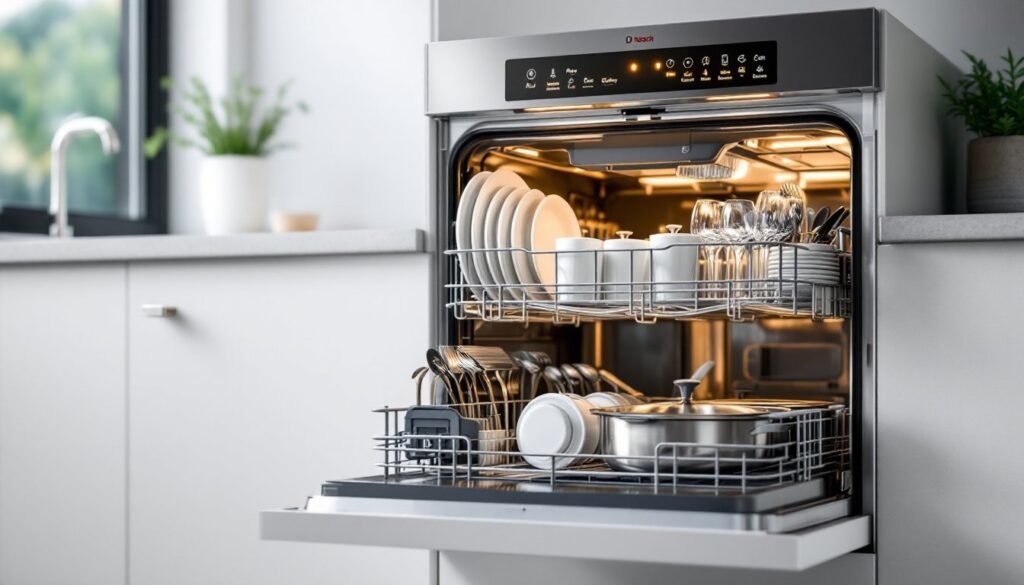
Most Bosch dishwashers pack five to eight different cycles, and let’s be honest, most owners stick to one or two favorites and ignore the rest. That’s a mistake. Each cycle is engineered for specific loads, soil levels, and efficiency targets. Using the wrong setting means wasted time, energy, or dishes that come out still grimy. Understanding what each cycle actually does, and when to use it, saves water, cuts down on rewashing, and extends the life of everything from wine glasses to cast iron pans. Here’s a practical breakdown of every Bosch dishwasher cycle and how to put them to work.
Table of Contents
ToggleKey Takeaways
- Bosch dishwasher cycles are engineered for specific loads and soil levels—using the correct cycle saves water, energy, and prevents rewashing.
- The Auto cycle is the smart everyday choice, using turbidity sensors to adjust temperature and wash time automatically for mixed loads.
- Heavy cycle tackles baked-on food and grease but is water and energy-intensive, so use it sparingly for truly difficult dishes.
- Eco cycle cuts energy use by 20–30% through longer soak times and lower temperatures, making it ideal for overnight or lightly soiled loads.
- Quick Wash handles lightly soiled items in 30–45 minutes, while Half Load reduces resource waste for smaller batches—but fully loaded dishwashers remain most efficient.
- Delicate protects fragile glassware and fine china with gentle spray and low temperature, while Sanitize reaches 155–165°F to meet NSF standards for hygienic loads.
Understanding How Bosch Dishwasher Cycles Work
Bosch dishwashers use a combination of water temperature, spray intensity, and cycle duration to clean dishes. Unlike older models that simply blast hot water for a set time, modern Bosch units adjust these variables based on the selected cycle.
Most cycles follow a basic structure: pre-rinse, main wash, rinse, and final rinse (often with a heated dry phase). The differences come down to how hot the water gets, how long each phase runs, and whether the machine uses sensors to adapt in real time.
Sensor-based cycles (like Auto) measure turbidity, essentially how dirty the water is, and adjust wash time and temperature accordingly. Fixed cycles (Heavy, Eco, Quick Wash) run a predetermined program regardless of load condition.
Bosch models also let users add options like Sanitize, Extra Dry, or Half Load to modify the base cycle. These aren’t standalone cycles: they’re add-ons that tweak temperature or drying time. Think of the base cycle as the foundation and options as the finishing details.
One important note: Bosch dishwashers heat water internally, so incoming water temperature matters less than on older machines. That said, if your home’s hot water supply is below 120°F, the dishwasher works harder and cycles run longer.
Auto Cycle: The Smart Choice for Everyday Loads
The Auto cycle is the workhorse. It uses turbidity sensors to detect how dirty the water is during the initial rinse, then adjusts wash time, water temperature (ranging from 115°F to 155°F), and rinse cycles to match the load.
For mixed loads, dinner plates with light sauce, a few greasy pans, and some glassware, Auto delivers consistent results without overthinking it. The cycle typically runs between 90 and 135 minutes, depending on what the sensors detect. If the load is cleaner than expected, the machine shortens the cycle and uses less water.
Auto is also a solid default for households that don’t want to babysit settings. It’s energy-efficient in practice because it avoids the overkill of Heavy or the compromises of Eco when neither is necessary.
That said, Auto isn’t perfect for every scenario. It doesn’t reach the high temps required for true sanitization, and it won’t save time if you’re in a rush. For lightly soiled dishes after a quick breakfast, some settings are more efficient than running a full Auto cycle.
Heavy Cycle: Tackling Tough, Baked-On Messes
The Heavy cycle (sometimes labeled Pots & Pans) is designed for the worst offenders: casserole dishes with baked-on cheese, roasting pans with caramelized drippings, and anything that’s been sitting too long.
This cycle maxes out water temperature, often hitting 155°F to 165°F, and extends both the wash and rinse phases. Expect runtimes around 120 to 150 minutes. The increased heat and mechanical action break down stubborn food particles and grease that lighter cycles can’t handle.
Use Heavy sparingly. It’s the most water- and energy-intensive option, and running it daily drives up utility bills unnecessarily. It’s also louder than gentler cycles due to the aggressive spray arm action.
Before loading, scrape off large food chunks but skip pre-rinsing. Bosch dishwashers are designed to handle food residue, and smart home appliances increasingly rely on soil sensors that work better when there’s something to detect. If dishes come out spotless on Auto, there’s no need to escalate to Heavy.
Normal and Eco Cycles: Balancing Clean and Efficiency
Normal is the straightforward, no-frills cycle. It runs a standard wash at moderate temperature (130°F to 145°F) and completes in about 100 to 120 minutes. For everyday dishes with typical food residue, pasta sauce, oily salad dressings, dried coffee, Normal gets the job done without the sensor overhead of Auto or the intensity of Heavy.
It’s predictable, reliable, and a good fallback if Auto seems inconsistent or if the user wants manual control over cycle length.
Eco cycle prioritizes water and energy savings over speed. It uses lower water temperatures (110°F to 130°F) and extends cycle time, often 150 to 210 minutes, to compensate for reduced heat with longer soak and wash phases.
Eco is ideal for lightly soiled loads or households running the dishwasher overnight when time doesn’t matter. It’s certified for energy efficiency standards and can cut utility costs by 20 to 30% compared to Heavy, depending on local rates.
The tradeoff? Drying performance suffers. Lower final rinse temps mean dishes come out damp more often, especially plastics. Using a rinse aid is essential on Eco, and cracking the door after the cycle helps moisture escape.
Quick Wash and Half Load: Fast Solutions for Light Cleaning
Quick Wash (or Express Wash) is for lightly soiled dishes that need a fast turnaround, coffee mugs after a morning meeting, snack plates, or utensils used for cold prep work. It runs in about 30 to 45 minutes at moderate temperature.
Don’t expect miracles. Quick Wash won’t handle dried-on food or grease. It’s a rinse-and-refresh cycle, not a deep clean. If dishes have been sitting more than an hour or two, use Auto or Normal instead.
Some Bosch models offer a Half Load option, which reduces water and energy use when the dishwasher is only partially filled. It’s not a separate cycle, it’s an add-on applied to Normal, Auto, or Eco. Half Load modifies spray patterns and rinse volume to avoid waste.
Use Half Load when running small batches, but don’t make it a habit. Dishwashers are most efficient when fully loaded. Running two half loads uses more resources than one full cycle, even with the Half Load option enabled. Plan dish accumulation around full loads whenever possible.
Delicate and Sanitize Cycles: Special Care for Your Dishes
Delicate (or Glass cycle) lowers water temperature and reduces spray pressure to protect fragile items, crystal, fine china, hand-painted ceramics, and thin glassware. It typically runs at 105°F to 120°F and takes about 90 to 110 minutes.
This cycle won’t sterilize or tackle heavy soil. It’s a maintenance wash for items that need gentle handling. If heirloom china has baked-on food, hand-wash it first, then run Delicate for a finishing rinse.
Sanitize isn’t always a standalone cycle, it’s often an option added to Normal, Auto, or Heavy. It raises the final rinse temperature to 155°F to 165°F for at least 10 minutes, meeting NSF/ANSI Standard 184 for residential dishwasher sanitization.
Use Sanitize for cutting boards, baby bottles, pet bowls, or any load where bacterial reduction matters. It’s also smart during flu season or after handling raw meat prep. The tradeoff is longer cycle time and higher energy use, so reserve it for situations where hygiene is a priority.
For households interested in maximizing appliance performance, pairing the right cycle with proper loading technique, angling bowls downward, spacing items for spray coverage, makes a bigger difference than any single setting.
Conclusion
Bosch packs serious engineering into every cycle, and using them correctly means cleaner dishes, lower utility bills, and less rewashing. Auto handles daily variety, Heavy tackles the tough stuff, Eco saves energy, and specialty cycles like Sanitize and Delicate protect what matters most. Match the cycle to the load, skip the guesswork, and let the machine do what it’s built for.