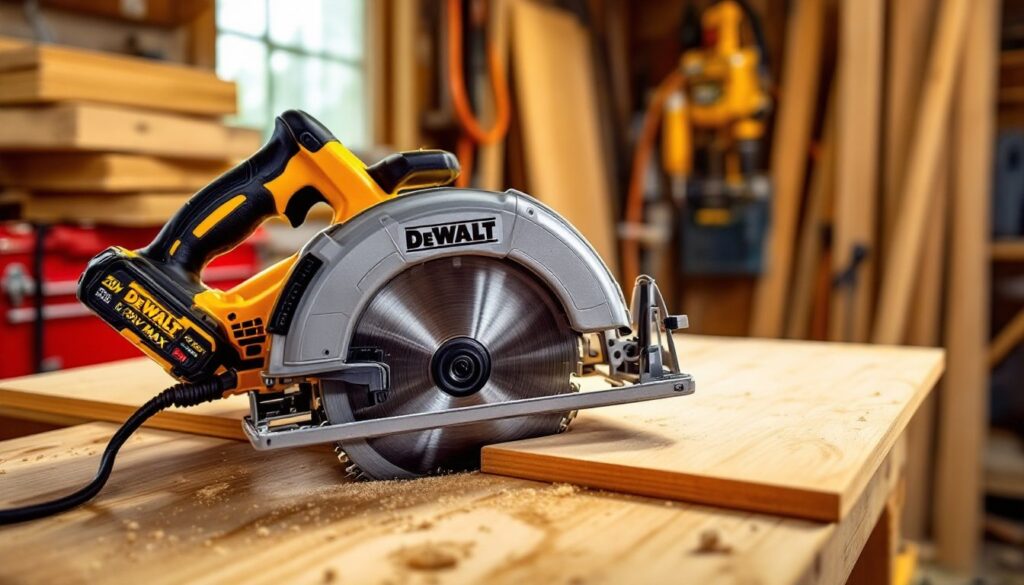
If there’s one tool that separates ambitious DIYers from folks who only own a screwdriver set, it’s a good circular saw. And when it comes to circular saws that won’t quit halfway through a deck build or kitchen reno, DeWalt’s lineup consistently delivers. Whether you’re ripping plywood for cabinet boxes, breaking down dimensional lumber, or making quick crosscuts on a job site, the right DeWalt circular saw makes the difference between clean cuts and frustrating do-overs. This guide walks through everything a homeowner needs to know, from picking between corded and cordless models to getting the most out of that 7-1/4″ blade on real-world projects.
Table of Contents
ToggleKey Takeaways
- DeWalt circular saws deliver durability and build quality that separates them from budget competitors, with features like cast magnesium bases and electric brakes that hold up under real-world use.
- The 20V MAX battery platform allows a DeWalt circular saw to work interchangeably with over 200 tools in the system, making it a cost-effective addition for homeowners already invested in the brand.
- A 7-1/4″ blade is the standard choice for most DIY projects, cutting through 2x lumber at any angle while remaining lighter and more maneuverable than larger models.
- Cordless models like the DCS573B offer freedom and power comparable to corded saws, delivering 40–60 cuts per battery charge for typical home improvement projects.
- Proper maintenance—especially blade sharpness, shoe cleanliness, and depth adjustment—is essential to prevent kickback, ensure square cuts, and maximize the lifespan of your DeWalt circular saw.
- Safety fundamentals including eye/ear protection, correct blade depth (¼” below material), and material support prevent binding and reduce injury risk during operation.
Why DeWalt Circular Saws Are a Top Choice for DIYers
DeWalt built its reputation in construction trades, which means their tools get engineered for daily abuse, not occasional weekend use. That durability trickles down to homeowners who want a saw that’ll last through years of deck repairs, fence posts, and garage workshop projects.
The DeWalt 20V circular saw platform is a big reason for the brand’s popularity. DeWalt’s 20V MAX battery system powers over 200 tools, so one set of batteries works across drills, impact drivers, sanders, and saws. For DIYers building a cordless tool collection, that interoperability saves money and garage space.
Build quality matters. DeWalt circular saws use metal lower guards and cast magnesium bases on many models, not the flimsy plastic found on budget competitors. The bevel shoes lock tight at common angles (22.5°, 45°), and the depth adjustment levers actually stay put under vibration. These aren’t details you appreciate until you’re three cuts into a project and your saw’s settings haven’t drifted.
Another practical advantage: DeWalt cordless circular saws hold resale value. If you upgrade or switch platforms, used DeWalt tools move fast on secondary markets because contractors and DIYers trust the brand. That’s not true for every tool manufacturer.
Key Features to Look for in a DeWalt Circular Saw
Not all circular saws are built for the same tasks. Here’s what actually matters when comparing models:
Blade Size: Most homeowners should focus on 7-1/4″ circular saws. A 7-1/4″ blade cuts through 2x material (actual dimensions: 1.5″ x 3.5″ or wider) at 90° and gets through a 2×4 even at 45° bevel. Compact 6-1/2″ models sacrifice cutting depth, they’ll handle sheet goods and trim, but struggle with dimensional lumber at angles.
Motor Power: Corded models deliver consistent power (typically 15-amp motors), while cordless saws rely on battery voltage and brushless motor efficiency. DeWalt 20V circular saws with brushless motors provide runtime and power comparable to corded saws for most residential projects. Cheaper brushed motors drain batteries faster and lose torque under load.
Bevel Capacity: Standard models bevel to 50° or 57°, which covers typical miter cuts. If you’re building furniture or doing trim carpentry, the wider bevel range helps. The bevel scale should have clear markings and positive stops at 22.5° and 45°.
Electric Brake: This feature stops the blade within seconds after releasing the trigger, rather than letting it coast. It’s a safety must-have, especially if kids or other people are around your workspace.
Shoe Material: Cast magnesium or aluminum shoes stay flat and resist warping better than stamped steel. A flat shoe means square cuts.
Corded vs. Cordless DeWalt Models
This decision comes down to how you work, not which is “better.”
Corded DeWalt circular saws never run out of juice mid-cut. If you’re breaking down full sheets of plywood or working through a pile of framing lumber, a corded saw won’t slow down. They’re also lighter since there’s no battery hanging off the back. The DWE575 and DWE575SB are solid corded options for DIYers who work near outlets or use extension cords.
The downside? You’re tethered. Cutting on a roof, building a fence across a yard, or working in an unfinished space without power outlets makes that cord a liability.
DeWalt cordless circular saw models (like the DCS570 or DCS573) give you freedom to move. Modern brushless motors and high-capacity batteries (5.0Ah or larger) provide enough runtime for typical home projects. You’ll get 40–60 cuts through 2x4s on a single charge, depending on wood species and battery size. For most DIYers, that’s a full afternoon of work.
The tradeoff: cordless saws cost more upfront, batteries add weight, and you need to manage charging. If you already own DeWalt 20V tools, though, a DeWalt 20V circular saw is a no-brainer addition to your kit.
Best DeWalt Circular Saw Models for Home Improvement in 2026
Here are the standout models for different DIY needs:
DCS573B (20V MAX Brushless 7-1/4″): This dewalt cordless circular saw 7 1/4 model is the sweet spot for serious DIYers. Brushless motor, 2-7/16″ cutting depth at 90°, and the power to rip through wet framing lumber without bogging down. The battery gauge is easy to read mid-cut, and the bevel adjustments are tool-free. If you’re building decks, framing walls, or doing rough carpentry, this is the one. Sold as a bare tool, so grab it if you already have 20V MAX batteries.
DCS571B (20V MAX Compact 4-1/2″): For finish carpentry, trim work, or cutting in tight spaces, this compact model makes sense. Won’t replace a full-size saw, but it’s ideal for baseboards, door casings, or breaking down smaller stock. The reduced weight (5.5 lbs with battery) matters when you’re making overhead cuts.
DWE575SB (Corded 7-1/4″ Lightweight): The best budget option for DIYers who don’t need cordless convenience. At under 9 lbs, it’s one of the lightest corded saws available without sacrificing cut quality. The electric brake and 57° bevel capacity make it more capable than the price suggests. Great first circular saw for homeowners learning the tool.
DCS574W1 (20V MAX 7-1/4″ Kit): If you’re new to the DeWalt 20V platform, this kit includes the saw, an 8.0Ah battery, and a charger. The high-capacity battery gives you all-day runtime, and the brushless motor delivers power comparable to corded models. This is the kit recommended by This Old House for cordless cutting in residential projects.
How to Use a DeWalt Circular Saw Safely and Effectively
Circular saws demand respect. They’re not complicated, but carelessness leads to kickback, binding, or worse. Always wear safety glasses and hearing protection, circular saws hit 90–95 dB, enough to damage hearing with prolonged exposure.
Setup and Adjustment:
- Set blade depth so teeth extend about 1/4″ below the material. Deeper isn’t better, it increases kickback risk and puts more blade in the cut, which can bind.
- Check that the bevel angle is locked at your desired setting. The adjustment lever should be tight.
- Ensure the lower blade guard moves freely. If it sticks, clean out sawdust buildup.
Making the Cut:
- Mark your cut line clearly. Use a straightedge or Speed Square as a guide for straight cuts.
- Position the saw shoe flat on the material with the blade alongside (not touching) the cut line.
- Start the saw and let it reach full speed before entering the cut. Never start the saw with the blade in contact with the material.
- Push forward steadily. Let the saw do the work, forcing it causes binding and rough cuts.
- Keep the cord (if corded) behind you and out of the cut path.
Kickback Prevention: Kickback happens when the blade binds and the saw violently jerks backward. Prevent it by supporting material so the cut opens (not closes) as you cut, avoiding cutting above shoulder height, and never reaching under the material while the blade spins. If the saw starts to bind, release the trigger immediately.
Common Mistakes: Don’t adjust depth or bevel while the saw is plugged in or has a battery installed. Don’t remove the blade guard or wedge it open. And don’t cut pressure-treated lumber without a dust mask, the preservatives create harmful dust.
Common DIY Projects Perfect for Your DeWalt Circular Saw
A circular saw DeWalt excels at these home improvement tasks:
Deck Building: Circular saws were made for cutting joists, rim boards, and decking. The DeWalt 7 1/4 circular saw models handle 2×6, 2×8, and even 2×10 lumber with proper support. Use a Speed Square to mark square cuts, and set up sawhorses to support long boards. Pressure-treated southern yellow pine cuts easier when the blade is sharp and you’re cutting with the grain.
Plywood Breakdown: Breaking down 4×8 sheets of plywood or OSB is a pain with a table saw. A circular saw and a straight edge guide (or a factory edge clamped to the sheet) makes accurate rip cuts. Set the sheet on 2×4 runners so the offcut doesn’t pinch the blade. Many woodworking tutorials show jig setups for repeatable cuts.
Framing and Rough Carpentry: Whether you’re framing a shed, building a non-load-bearing partition wall, or blocking between joists, a circular saw handles the volume. For studs and plates, mark your cut, use a Speed Square to guide the shoe, and cut. A DeWalt circular saw cordless model shines here since you’re moving around the site constantly.
Fence Posts and Landscape Timbers: Cutting 4×4 or 6×6 posts requires two passes (the blade won’t cut all the way through in one go). Mark all four sides, cut from two opposing sides at 90°, then finish with a reciprocating saw or handsaw if needed. The bevel adjustment helps when cutting angles for post tops.
Cutting Rigid Foam and Cement Board: With the right blade (a fine-tooth plywood blade or specialized cement board blade), your saw cuts rigid foam insulation and cement backer board for tile projects. These materials dull blades fast, so don’t use your best framing blade.
Maintenance Tips to Keep Your DeWalt Saw Running Smoothly
Circular saws are workhorses, but neglect kills them. Here’s how to keep your DeWalt circular saw 20V or corded model cutting clean:
Blade Care: Dull blades cause more problems than any other factor. They burn wood, bind in cuts, and overwork the motor. Change blades when you see burn marks on cuts, increased splintering, or the saw laboring through material it used to slice easily. For framing, a 24-tooth carbide blade works. For plywood and finish work, upgrade to a 40- or 60-tooth blade. Clean pitch and resin buildup off blades with oven cleaner or a dedicated blade cleaner, grimy blades cut poorly even when sharp.
Shoe and Guard Maintenance: Sawdust packs into the lower guard pivot and depth adjustment. Blow it out with compressed air after heavy use. A sticking guard is dangerous. Wipe the shoe clean and check that it’s not bent or warped. If the saw won’t make square cuts anymore, the shoe is likely tweaked, this happens if you drop the saw or cut through a hidden nail.
Battery and Electrical: For cordless models, don’t store batteries fully depleted. Charge them to about 50% for long-term storage. Keep battery contacts clean, corrosion here causes connection issues. On corded saws, inspect the cord for cuts or exposed wire. A damaged cord is a shock hazard: replace it immediately.
Motor Brushes (if applicable): Brushed motors have carbon brushes that wear out. If your saw loses power or sparks excessively, brushes may need replacement. Brushless motors (found on newer 20V models) eliminate this maintenance.
Lubrication: The depth and bevel adjustment mechanisms benefit from occasional light oil or dry lubricant spray. Don’t oil the motor or blade guard pivot, use dry graphite lubricant there to avoid attracting dust.
Store your saw in a case or on a shelf where it won’t get knocked around. A well-maintained DeWalt 20V circular saw or corded model will outlast most DIYers’ project lists. Many contractors rely on tools that Popular Mechanics rates for durability in field conditions, and DeWalt consistently ranks near the top for longevity when properly cared for.