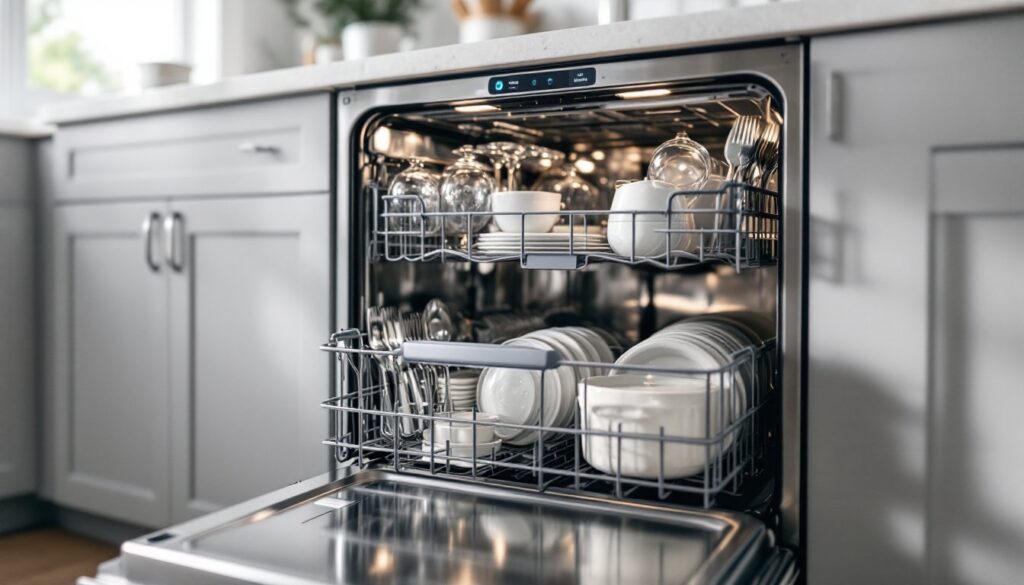
Most people load the dishwasher, close the door, and hit the same button every time, usually whatever lights up first. But modern dishwashers come with a half-dozen cycle options, each engineered for specific soil levels, dish types, and time constraints. Understanding what each cycle actually does can save water, energy, and time, while extending the life of both the dishes and the appliance. This guide breaks down the most common dishwasher cycles, how they differ mechanically, and when to use each one to get cleaner results without guessing.
Table of Contents
ToggleKey Takeaways
- Modern dishwasher cycles control water temperature, spray pressure, and duration to match soil levels, saving water and energy compared to manual washing.
- The normal cycle is the most efficient everyday option for typical food residue, using 4-5 gallons of water on modern machines and typically running 1.5 to 2 hours.
- Heavy duty dishwasher cycles tackle baked-on messes by heating water to 150°F-160°F and extending wash time, but should be used sparingly to avoid damaging delicate items.
- Quick wash cycles complete in 30 minutes to 1 hour for lightly soiled dishes, but result in lower energy efficiency per dish if used repeatedly instead of batching full loads.
- Delicate cycles protect fragile glassware and china with lower water temperatures (120°F-125°F) and reduced spray pressure, preventing thermal shock and etching.
- Specialty cycles like sanitize, eco, and steam offer targeted benefits for specific needs, but most households can handle 90% of washing with just normal and heavy cycles.
What Are Dishwasher Cycles and How Do They Work?
A dishwasher cycle is a pre-programmed sequence that controls water temperature, spray pressure, cycle duration, and drying method. The control board adjusts these variables based on the selected cycle to match the soil level and dish type.
Most cycles follow the same basic stages: pre-rinse, main wash, rinse, and dry. What changes between cycles is how hot the water gets (typically ranging from 120°F to 160°F), how long each stage runs, and how aggressively the spray arms work. A heavy cycle might heat water to 150°F or higher and run for 2.5 hours, while a quick wash stays around 120°F and finishes in 30 minutes.
Newer dishwashers also adjust water usage per cycle. A normal cycle on an ENERGY STAR®-rated model typically uses 3 to 5 gallons of water, compared to 10+ gallons for older units. Sensors in mid-to-high-end models measure turbidity (how dirty the water is) and adjust wash time accordingly, which is why cycle length can vary even on the same setting.
Understanding these variables helps you match the cycle to the load, avoiding overwashing delicate items or underwashing crusty casserole dishes.
Normal Cycle: Your Go-To Everyday Wash
The normal cycle (sometimes labeled “auto” or “regular”) is designed for everyday dishes with typical food residue: dried sauces, light grease, and stuck-on bits that aren’t baked or charred. It’s the baseline most manufacturers tune for energy efficiency and compliance with ENERGY STAR standards.
This cycle usually runs between 1.5 to 2 hours, heating water to around 130°F to 140°F. It uses moderate spray intensity and includes a heated dry phase. Water usage averages 4 to 5 gallons per load on modern machines.
Use the normal cycle for plates, bowls, utensils, and glassware after regular meals. It handles most food residue without pre-rinsing, assuming you scrape off large chunks first. Pre-rinsing under the tap actually wastes water and can confuse soil sensors on newer dishwashers, leading them to underestimate how dirty the load is.
If dishes still come out with residue, check your water heater temperature, it should be set to at least 120°F at the tap. Also verify that spray arms spin freely and that the detergent dispenser opens correctly. The normal cycle is the most efficient option for routine use and should be the default unless the load clearly needs more or less cleaning power.
Heavy Duty Cycle: Tackling Tough, Baked-On Messes
The heavy duty cycle (also called “pots and pans” or “intensive”) cranks up the heat and extends wash time to handle baked-on, dried, or greasy messes that the normal cycle can’t touch. Think lasagna pans, roasting trays, griddles, and casserole dishes that sat overnight.
This cycle typically runs 2 to 3 hours, heating water to 150°F to 160°F. Higher temps help dissolve fats and proteins, while longer wash and rinse phases give detergent more time to work. Spray pressure is also higher, which means louder operation but better mechanical scrubbing.
Water usage can climb to 6 to 7 gallons or more, depending on the model. That’s still far less than hand-washing the same load, but it’s worth noting if you’re on a well or pay for water by volume.
Use the heavy cycle sparingly, only when you have a full load of heavily soiled items. Don’t throw delicate glassware or nonstick cookware in here: the high heat and aggressive spray can damage coatings and etch glass. If you frequently run this cycle, consider soaking tough pans for 15 minutes before loading them, which can knock the soil level down enough to use the normal cycle instead and save energy. Many dishwashers now feature soil sensors and cycle optimization that adjust automatically, but heavy duty remains the manual override for the worst messes.
Quick Wash Cycle: Fast Cleaning for Lightly Soiled Dishes
The quick wash cycle (sometimes labeled “express” or “1-hour wash”) sacrifices thoroughness for speed. It’s designed for dishes that are lightly soiled or recently used, think glasses from a party, snack plates, or utensils that haven’t dried yet.
This cycle typically completes in 30 minutes to 1 hour, using lower water temperatures (around 120°F to 130°F) and shorter wash phases. Some models skip the heated dry entirely or use only a brief fan dry, so dishes may come out damp.
Water usage is lower, often 3 to 4 gallons, but energy efficiency per dish cleaned is actually worse if you run half-loads repeatedly instead of waiting for a full load on the normal cycle.
Use the quick cycle when you need dishes back in rotation fast or when food hasn’t dried on yet. It works well for breakfast dishes washed before dinner, or for pre-rinsed items after a gathering. Don’t expect it to handle dried egg, oatmeal, or any grease buildup. If dishes come out dirty, it’s not a cycle failure, you just asked it to do more than it’s rated for. In that case, reload and run the normal cycle. For everyday efficiency, organized kitchens often batch loads to use longer, more effective cycles rather than running quick washes multiple times a day.
Delicate Cycle: Protecting Your Fragile Glassware and China
The delicate cycle (also called “china/crystal” or “glassware”) uses lower water temperatures, gentler spray pressure, and sometimes a slower fill rate to protect fragile items from thermal shock and mechanical damage.
Water temperature stays around 120°F to 125°F, and spray intensity is reduced. Cycle time is usually similar to the normal cycle, 1.5 to 2 hours, because the lower mechanical action requires more soak time to clean effectively. The drying phase is often cooler or fan-based to prevent cracking.
Use this cycle for hand-painted china, crystal stemware, gold-rimmed plates, and any glassware prone to etching. It’s also appropriate for lightweight plastics that might warp under high heat. Don’t use it for heavily soiled items: the reduced spray won’t cut through grease or dried food.
Before running delicate items, check if they’re dishwasher-safe at all. Antique china, wood-handled utensils, and some hand-blown glass should be hand-washed regardless of cycle choice. If you’re washing mixed loads, place delicate items on the top rack where water pressure is lower, and use the normal cycle unless the entire load is fragile. This avoids running two separate cycles and wasting water.
Other Common Dishwasher Cycles Worth Knowing
Beyond the core four, many dishwashers include specialized cycles that address specific needs or preferences.
Rinse/Hold Cycle: This quick rinse (no detergent, no heat) prevents food from drying on dishes when you’re waiting to accumulate a full load. It uses minimal water, under 1 gallon, and takes about 10 minutes. Useful if you only run the dishwasher every few days.
Sanitize Cycle: Raises water temperature to 150°F or higher (sometimes up to 165°F) during the final rinse to kill bacteria and meet NSF/ANSI Standard 184 for residential dishwashers. Required if you’re washing baby bottles, cutting boards, or anything that contacted raw meat. Not all models include this: check your manual. Note that this is different from a “sanitize” option that can be added to other cycles.
Eco/Energy Saver Cycle: Uses less energy by heating water more slowly and relying on longer soak times rather than high heat. Cycle time can stretch to 3+ hours, but energy use drops by 10-20% compared to normal. Good for overnight runs or when you’re not in a hurry. Water usage is similar to the normal cycle, sometimes slightly less.
Half-Load or Zone Wash: Available on some models, this cycle only sprays the top or bottom rack, saving water and energy when you don’t have a full load. Effectiveness varies by brand: some users report inconsistent results.
Steam Cycle: Pre-treats dishes with a burst of steam before the main wash to loosen stuck-on food. Found on higher-end models and adds 15-30 minutes to the cycle. Helpful for baked-on cheese or starch, but not a substitute for scraping plates. For inspiration on integrating high-performance appliances into modern kitchen designs, many remodel guides highlight steam-equipped dishwashers as both functional and premium additions.
Most households can get by with normal, heavy, and quick cycles. Specialty cycles are conveniences, not necessities, but if your dishwasher has them and they match your needs, use them.
Conclusion
Choosing the right dishwasher cycle isn’t complicated once you match soil level to cycle intensity. Use normal for everyday loads, heavy for baked-on messes, quick for lightly soiled dishes, and delicate for fragile items. Running the appropriate cycle saves water, energy, and wear on both dishes and the machine. Most people can cover 90% of their washing needs with just the normal and heavy cycles.