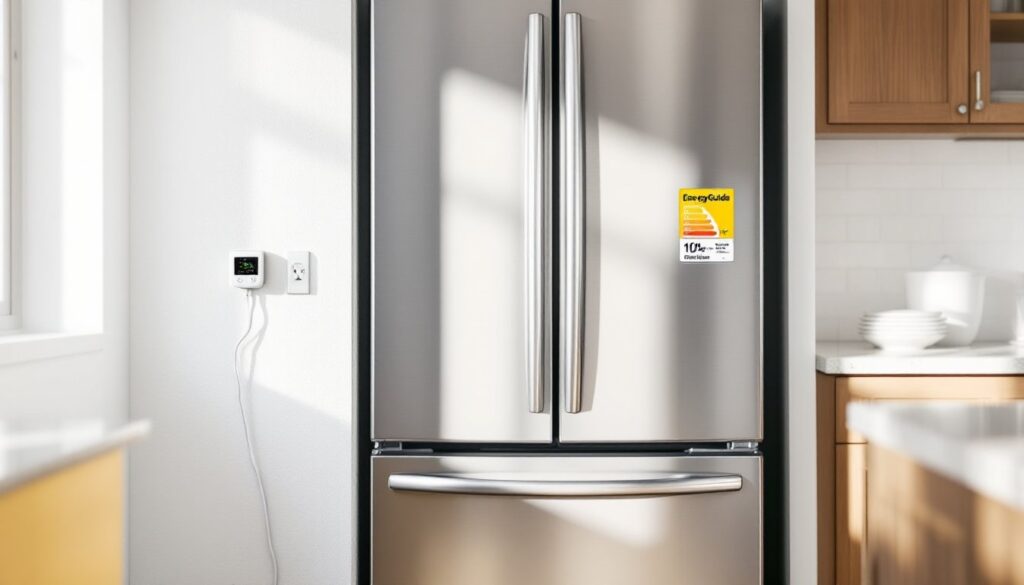
Refrigerators run 24/7, making them one of the biggest energy consumers in any home. Whether you’re trying to lower your electric bill, size a backup generator, or spec out a solar power system, understanding how much power your fridge draws is essential. The average refrigerator uses between 100 and 800 watts, but that range varies widely based on type, size, age, and efficiency rating. This guide breaks down refrigerator wattage by model, shows how to calculate actual energy costs, and highlights the factors that push your fridge’s power consumption up or down.
Table of Contents
ToggleKey Takeaways
- The average refrigerator uses between 100 and 800 watts depending on type, size, and age, but calculating average hourly wattage using the EnergyGuide label provides a more accurate picture than peak ratings.
- A typical standard refrigerator costs $72–$144 per year to operate at the national average electricity rate of $0.16/kWh, making proper sizing critical for generator and solar power planning.
- Ambient temperature is the biggest factor affecting power consumption—a fridge in a 95°F garage can double its energy use compared to one in a 70°F kitchen.
- Simple maintenance like cleaning condenser coils every 6–12 months, replacing worn door gaskets, and ensuring proper ventilation clearance can reduce refrigerator energy use by 20–50%.
- Replacing a refrigerator older than 15 years with an Energy Star model can cut annual energy consumption in half, paying for itself in energy savings within 5–8 years in high-cost electricity regions.
Understanding Refrigerator Wattage and Power Consumption
Wattage measures how much electrical power an appliance uses at any given moment. But refrigerators don’t run continuously, the compressor cycles on and off to maintain temperature, so the rated wattage on the nameplate (usually found inside the fridge or on the back panel) represents peak draw, not constant use.
Most modern refrigerators list wattage somewhere between 100W and 800W. Compact units sit at the low end, while older or larger side-by-side models can spike higher. The compressor, the motor that circulates refrigerant, accounts for the bulk of that power. When it kicks on, wattage jumps: when it cycles off, the fridge drops to a low-power state, running only the control board and interior light.
To get a clearer picture, look for the annual kilowatt-hour (kWh) rating on the yellow EnergyGuide label. This estimates total yearly consumption under typical conditions. Divide that number by 365, then by 24, to find average hourly wattage. For example, a fridge rated at 400 kWh per year draws roughly 45W on average, far lower than its peak rating.
Understanding the difference between peak wattage and average consumption matters when sizing a generator or inverter. A 600W rated fridge might only pull 150W most of the time, but you’ll still need enough capacity to handle that 600W startup surge when the compressor engages.
Average Wattage by Refrigerator Type and Size
Compact and Mini Refrigerators
Compact and mini fridges, typically under 4.5 cubic feet, are common in dorm rooms, offices, and wet bars. These units draw between 50 and 100 watts during compressor operation. Older models or those without Energy Star certification can creep up to 150W.
Because of their smaller volume and simpler cooling systems, compact refrigerators cycle less frequently than full-size models. Expect annual energy use around 200 to 300 kWh, translating to roughly 23–34W average draw. If you’re running one on a small solar setup or portable power station, budget for at least 100W continuous capacity to cover startup spikes.
Standard Top and Bottom Freezer Models
Top-freezer and bottom-freezer refrigerators in the 18 to 25 cubic foot range are the workhorses of most kitchens. Rated wattage typically falls between 100 and 400 watts, with Energy Star–certified models clustering around 150–250W.
Annual consumption for a modern standard fridge averages 300 to 600 kWh, or about 34–68W on average. Units built before 2010 can use significantly more, sometimes double, because of less efficient compressors and poorer insulation. Independent appliance testing confirms that insulation quality and compressor design are the biggest drivers of wattage variance in this category.
If you’re replacing an older model, check the EnergyGuide label. A 15-year-old top-freezer unit might pull 700 kWh per year, while a new Energy Star replacement drops that to 350 kWh, a meaningful cut in both power draw and operating cost.
Side-by-Side and French Door Refrigerators
Side-by-side and French door refrigerators offer more interior volume, often 25 to 30+ cubic feet, and come loaded with features like ice makers, water dispensers, and dual evaporators. These extras push rated wattage to 400–800 watts, with some premium models exceeding 1,000W during startup.
Annual energy use ranges from 500 to 800+ kWh, averaging 57–91W continuous draw. French door models with bottom freezers tend to be slightly more efficient than side-by-side layouts because the wider refrigerator compartment retains cold air better when the door opens. Still, expect higher consumption than a basic top-freezer unit.
Ice makers and through-door dispensers add another 50–100 kWh per year. If your household rarely uses crushed ice, disabling the ice maker can trim a few dollars off your annual bill. Kitchen appliance experts often recommend turning off ice makers in secondary or garage fridges to save energy without sacrificing food storage.
How to Calculate Your Refrigerator’s Energy Costs
Calculating what your fridge costs to run takes three pieces of information: annual kWh consumption, your local electricity rate, and basic multiplication.
- Find annual kWh usage. Check the yellow EnergyGuide label on the front or inside of the fridge. It lists estimated yearly consumption, something like 450 kWh/year.
- Look up your electricity rate. Your utility bill shows cost per kilowatt-hour, typically between $0.10 and $0.30 depending on region. The national average hovers around $0.16/kWh as of 2026.
- Multiply kWh by rate. For a 450 kWh/year fridge at $0.16/kWh:
- 450 × 0.16 = $72 per year, or about $6 per month.
If you don’t have the EnergyGuide label, you can measure actual draw with a plug-in wattage meter (often called a Kill A Watt). Plug the meter into the wall, then plug the fridge into the meter. Let it run for 24 hours to capture full compressor cycles, then check cumulative kWh. Multiply that daily figure by 365 for annual usage.
For generator or solar sizing, you need to know peak wattage and startup surge. Refrigerator compressors can draw 2–3× rated wattage for a few seconds during startup. A fridge rated at 600W might spike to 1,500W momentarily. Most inverter generators and pure-sine-wave inverters handle this surge, but confirm your equipment’s peak capacity before relying on it during an outage.
If you’re running a fridge off-grid, size your battery bank to cover at least 1.5–2 kWh per day for a standard model, plus a safety margin for cloudy weather or consecutive compressor cycles.
Factors That Affect Your Refrigerator’s Power Usage
Several variables push refrigerator power consumption up or down, often by 20–50% compared to the rated estimate.
Ambient temperature is the biggest factor. A fridge in a hot garage or un-air-conditioned sunroom works harder to maintain internal temperature. For every 10°F increase in surrounding air, expect energy use to climb roughly 5–10%. If your garage hits 95°F in summer, that secondary fridge can double its power draw compared to the same unit in a 70°F kitchen.
Door seals and gasket condition matter more than most homeowners realize. A worn or torn gasket lets cold air leak out, forcing the compressor to cycle more often. Test your seal by closing the door on a dollar bill: if you can pull it out easily, the gasket needs replacement. New gaskets run $50–$100 depending on model, and the labor is straightforward, peel off the old seal and press the new one into the retaining groove.
Placement and clearance affect airflow around the condenser coils. Refrigerators need at least 1–2 inches of clearance on the sides and back to vent heat. Jamming a fridge into a tight cabinet cutout or against a wall traps hot air, making the compressor run longer. Pull the unit forward slightly if you notice excessive heat buildup on the back panel.
Condenser coil cleanliness directly impacts efficiency. Dust, pet hair, and kitchen grease coat the coils over time, insulating them and reducing heat transfer. Testing by appliance labs shows that dirty coils can increase energy use by 25% or more. Clean coils every 6–12 months using a coil brush or vacuum attachment. Unplug the fridge first, then access the coils from the back or underneath (depending on model). Wear a dust mask, coil cleaning kicks up grime.
Thermostat settings also play a role. The FDA recommends 37°F for the fridge compartment and 0°F for the freezer. Setting temps colder than necessary wastes energy without improving food safety. Use an appliance thermometer to verify actual interior temperature: built-in dials aren’t always accurate.
Door openings and loading habits create minor but cumulative effects. Frequent door openings dump cold air and introduce warm, humid air that the compressor must cool. Keeping the fridge reasonably full, but not packed, helps maintain stable temps because the mass of cold food acts as a thermal buffer. Just don’t block air vents inside: proper circulation prevents warm spots and freezer burn.
Finally, age and efficiency rating remain the most reliable predictors of energy use. Refrigerators built before 2001 can use 1,000–1,500 kWh per year. A comparable Energy Star model from 2020 or later drops that to 350–450 kWh. If your fridge is over 15 years old and you’re planning a kitchen refresh, replacement often pays for itself in energy savings within 5–8 years, especially in high-cost electricity markets.