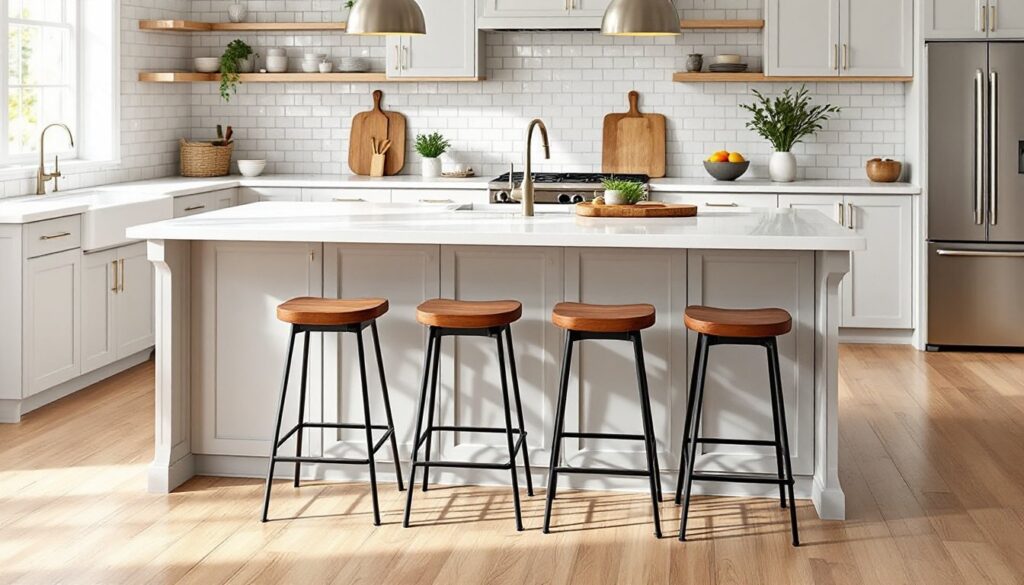
Picking the right stools for a kitchen island isn’t just about filling empty space. The wrong height leaves everyone’s knees jammed under the counter or dangling awkwardly. The wrong style clashes with your cabinets. And the wrong build quality means you’ll be tightening bolts every few months or replacing cracked seats within a year. Kitchen island stools, whether you call them bar stools, counter stools, or kitchen island chairs, are part seating, part design anchor, and entirely functional. This guide walks through the measurements, styles, and features that matter, so homeowners can choose kitchen island seats that work with their space, not against it.
Table of Contents
ToggleKey Takeaways
- Measure your counter height and overhang (minimum 9 inches, ideally 12–15 inches) before selecting stools for kitchen island to ensure proper comfort and legroom.
- Counter-height islands (36 inches) need stools with 24–26 inch seats, while bar-height islands (42 inches) require 28–30 inch seats, maintaining 10–12 inches of clearance between seat and counter.
- Backless stools maximize floor space and sightlines in small kitchens, while stools with backs offer better support for extended dining and transform the island into a proper eating area.
- Solid frames, reinforced joinery, footrests, and durable finishes are critical for kitchen island stools, which endure frequent use, spills, and heavy traffic more than typical dining furniture.
- Match your kitchen island stools to your design style—metal for modern, wood for farmhouse, mixed materials for industrial—by coordinating finishes and materials rather than exact color matches.
- Test stools in person whenever possible, as comfort is subjective and what looks perfect online may feel uncomfortable, wobbly, or awkwardly proportioned in your actual space.
Why the Right Kitchen Island Stools Matter
Kitchen islands serve as prep zones, breakfast bars, assignments stations, and social hubs. The chairs for kitchen island use need to support all of those roles without getting in the way. Poorly chosen stools create bottlenecks in traffic flow, force uncomfortable postures during meals, or visually crowd a kitchen that should feel open.
Ergonomics drive comfort. A stool that’s too tall forces diners to hunch. One that’s too short leaves legs dangling or knees hitting the underside of the counter. Both scenarios discourage people from lingering, which defeats the purpose of an eat-in island.
Durability matters more here than in a dining room. Kitchen island stool seats take abuse: spills, frequent use, kids climbing on and off, and constant bumps from foot traffic. Chairs for island kitchen areas need solid joinery, scratch-resistant finishes, and materials that wipe clean.
Style cohesion ties the room together. The island is often the kitchen’s focal point. Stools that clash with cabinetry, countertops, or lighting fixtures can fragment the design. Conversely, well-chosen barstools for kitchen island use can reinforce the aesthetic, whether that’s modern farmhouse, industrial, mid-century, or transitional.
How to Measure for Kitchen Island Stools
Before shopping, measure the island’s overhang and counter height. Skipping this step leads to returns, wasted time, and stools that don’t fit.
Measure counter height from floor to underside of the countertop. Use a tape measure at multiple points along the island, older homes sometimes have uneven floors. Record the smallest measurement.
Measure the overhang depth. This is the distance the countertop extends beyond the base cabinets. A minimum of 9 inches is needed for knee room: 12 to 15 inches is more comfortable, especially for stools with backs. If the overhang is less than 9 inches, the island isn’t suitable for seating without modifying the countertop or adding a support bracket and extending the surface.
Calculate stool quantity and spacing. Allow 24 to 30 inches of width per stool to avoid elbow-bumping. For a 6-foot island (72 inches), that’s three stools comfortably or four if they’re narrow backless models. Measure from the center of one seat to the center of the next.
Counter Height vs. Bar Height: What You Need to Know
Counter-height islands (typically 36 inches from floor to top) require counter stools with seat heights of 24 to 26 inches. This is the most common setup in modern kitchens and provides a comfortable 10- to 12-inch clearance between seat and counter.
Bar-height islands (usually 42 inches high) need bar stools with seat heights of 28 to 30 inches. Bar-height islands are less common in residential kitchens but appear in open-concept designs where the island doubles as a room divider.
Non-standard heights exist. Some custom islands fall between these ranges. In that case, aim for 10 to 12 inches of clearance between the seat and the underside of the counter. If the island has a raised section for dining separate from the prep surface, measure each level independently.
Adjustable-height stools offer flexibility but introduce mechanical parts that can wear out. Pneumatic lift mechanisms are convenient for households with mixed heights or multi-use islands, but they add cost and potential maintenance. For most fixed-height islands, a standard stool is simpler and more durable.
Types of Kitchen Island Stools to Consider
Kitchen stools for island use fall into several categories, each with trade-offs in comfort, storage, and visual weight.
Backless stools tuck completely under the counter, maximizing floor space and sightlines. They’re ideal for smaller kitchens or islands in high-traffic areas. The downside: no lumbar support, which discourages long sits. Best for quick meals or casual perching.
Low-back stools offer a middle ground, some support without the bulk of a full backrest. These work well in transitional kitchens where the island serves multiple roles.
Full-back stools and kitchen island chairs with backs provide the most comfort for extended sitting. They’re the best counter stools for kitchen island use when the island doubles as a dining table. The trade-off is visual and physical bulk: they don’t tuck away and can make a kitchen feel crowded if space is tight.
Swivel bar stools for kitchen island configurations allow users to rotate without dragging the stool. This is helpful in open-plan layouts where people need to pivot between the island and other areas. Swivel mechanisms add moving parts, so look for 360-degree rotation with a return mechanism that centers the seat when not in use.
Saddle stools feature a contoured seat that promotes better posture by tilting the pelvis forward. They’re ergonomic for long sits but polarizing, some find them uncomfortable.
Folding or stackable stools are practical for kitchens that host large gatherings occasionally. They store flat when not needed. But, folding joints are potential weak points: inspect the hinge and lock mechanisms before buying.
For DIYers with woodworking skills, building custom bar stools from scratch allows for exact sizing and finish matching. Plans typically call for 2×2 or 2×4 lumber for legs, plywood or solid wood for seats, and wood glue with pocket screws for joinery. A miter saw, drill, and sander are the main tools required.
Backless Stools vs. Stools with Backs
The backless-versus-backed debate comes down to use case and space.
Backless stools keep sightlines open, an advantage in open-concept homes where the island shouldn’t block views between kitchen and living areas. They slide completely out of the way, leaving clear walkways. Cleaning under and around them is easier. But, they’re less comfortable for lingering over coffee or assignments.
Stools with backs transform the island into a proper dining spot. Kitchen island chairs with backs are essential if the island is the primary eating area and there’s no separate dining table. They provide support for slouching teenagers, adults working on laptops, or elderly family members. The downside: they occupy more visual and physical space, and you’ll need that 12- to 15-inch overhang for leg and back clearance.
Material and build matter more than style. A well-built backless stool outlasts a flimsy backed one. Check for solid wood or steel frames, reinforced joinery (mortise-and-tenon, corner blocks, or welded steel), and footrests positioned for actual use (not too high or too far forward).
Key Features That Make Kitchen Stools Comfortable and Functional
Certain design details separate good kitchen island stool options from regrettable ones.
Footrests are non-negotiable. Dangling feet cut off circulation and cause discomfort. Footrests should sit 6 to 8 inches below the seat and be sturdy enough to support full body weight when someone shifts position. Rungs on all four sides beat single-bar designs for flexibility.
Seat width and depth affect comfort. A seat should be at least 15 inches wide and 13 to 15 inches deep for adult comfort. Narrow seats (under 14 inches) work for kids or tight spaces but aren’t suitable for long sits. Contoured or padded seats add comfort: hard flat seats are fine for short perching.
Cushions and upholstery add comfort but require maintenance. Vinyl and faux leather wipe clean but can crack or peel over time, especially in sunny kitchens. Fabric looks softer but stains easily: choose performance fabrics with stain resistance if going this route. Removable, washable covers are ideal. Avoid light colors unless the household is adults-only and spill-averse.
Swivel mechanisms should be smooth and controlled. Cheap swivels wobble or stick. Test the rotation in-store if possible, and check reviews for mentions of loosening over time. Some swivel bar stools for kitchen island use include a return spring that auto-centers the seat, a nice touch that keeps things tidy.
Weight capacity matters. Most residential stools are rated for 250 to 300 pounds. If the household includes larger adults or the stools will see heavy use, look for commercial-grade models rated to 400+ pounds. The frame material and joint construction determine capacity more than seat size.
Floor protection prevents scratches. Metal and wood legs can mar hardwood or tile. Add felt pads or rubber caps to the feet. For stools that get dragged frequently, replaceable felt glides (available at hardware stores for under $5 per set) are a simple fix.
Armrests are optional and situational. They add comfort and support but also width, which can be a problem in tight kitchens. Armrests should clear the underside of the counter by at least 2 inches when the stool is pushed in.
Matching Your Stools to Your Kitchen Style
Stools should complement the kitchen’s existing materials, finishes, and design language without slavishly matching every detail.
Modern and contemporary kitchens pair well with clean-lined metal or molded plastic stools. Look for powder-coated steel, brushed nickel, or matte black finishes. Backless designs and low-profile backs keep the look minimal. Avoid ornate details or heavy wood tones.
Farmhouse and rustic kitchens call for solid wood stools in oak, pine, or reclaimed lumber. Distressed finishes, X-back designs, and turned legs fit the aesthetic. Many design-focused resources curate farmhouse-friendly stool options that balance function and style.
Industrial kitchens thrive on mixed materials: metal frames with wood or leather seats. Exposed welds, visible bolts, and matte or oil-rubbed finishes reinforce the look. Adjustable-height shop stools with swivel mechanisms are authentic to the style.
Transitional kitchens blend traditional and modern elements, so stools should do the same. Upholstered seats with clean-lined frames, wood with metal accents, or neutral tones work well. Avoid anything too ornate or too stark.
Color and finish coordination doesn’t mean everything matches. If the kitchen has stainless steel appliances, metal stool frames tie in visually. If the island has a butcher-block top, wood seats echo that warmth. If cabinetry is painted navy or sage, consider stools in a complementary neutral (gray, cream, natural wood) rather than trying to match the exact paint color.
Mixing stool styles can work, if done intentionally. Some homeowners use backless stools on one side of the island and backed chairs on the other to define zones. This approach works best when the stools share a common material, finish, or color to maintain cohesion.
For broader kitchen design guidance and layout ideas, design-savvy platforms offer inspiration that goes beyond furniture alone, helping homeowners see how island seating fits into the larger kitchen ecosystem.
Test before committing. If possible, sit on stools in a showroom or buy one as a sample. Comfort is subjective, what feels great to one person may not to another. A stool that looks perfect online can feel wobbly, too narrow, or awkwardly proportioned in person. Most retailers accept returns, but hauling four stools back to a store is a hassle worth avoiding.
Choosing the right kitchen island chair, stool, or seat is part measurement, part style sense, and part honest assessment of how the space gets used. Get the height and spacing right, pick a build quality that matches the use level, and select a design that ties into the kitchen’s broader look. The result is seating that works hard, looks good, and lasts.