Spotting super tiny bugs in house corners or bedroom small tiny bugs in house baseboards can turn a relaxing evening into a source of frustration. Whether they’re crawling across your countertops, hovering near drains, or clustered around windowsills, these uninvited guests aren’t just annoying, they signal underlying moisture, food, or structural issues that need addressing. The good news? Most homeowners can tackle these infestations with targeted DIY methods once they correctly identify the culprit. This guide walks through the most common tiny house bugs, explains what draws them indoors, and delivers practical solutions to eliminate them and keep them out for good.
Table of Contents
ToggleKey Takeaways
- Tiny bugs in house settings fall into predictable categories—ants, booklice, springtails, fruit flies, carpet beetles, clothes moths, drain flies, and fungus gnats—each requiring specific identification before treatment.
- Moisture, food sources, entry points, and seasonal climate changes are the primary reasons tiny bugs invade your home, so addressing root causes prevents reinfestation.
- DIY solutions like drain treatments, vacuuming, diatomaceous earth, vinegar traps, and moisture control can eliminate most tiny house bugs effectively within 4–6 weeks of consistent application.
- Sealing foundation cracks, maintaining humidity below 50%, storing clothing in airtight bins, and conducting quarterly inspections are essential prevention strategies to keep tiny bugs out long-term.
- When DIY methods fail or infestations persist, hiring a licensed pest control professional ensures safe application of commercial-grade materials and compliance with Integrated Pest Management principles.
Common Types of Tiny Bugs Found Indoors
Most small tiny brown bugs in house settings fall into a handful of recognizable categories. Accurate identification is half the battle, misidentifying a pest leads to wasted time and ineffective treatments.
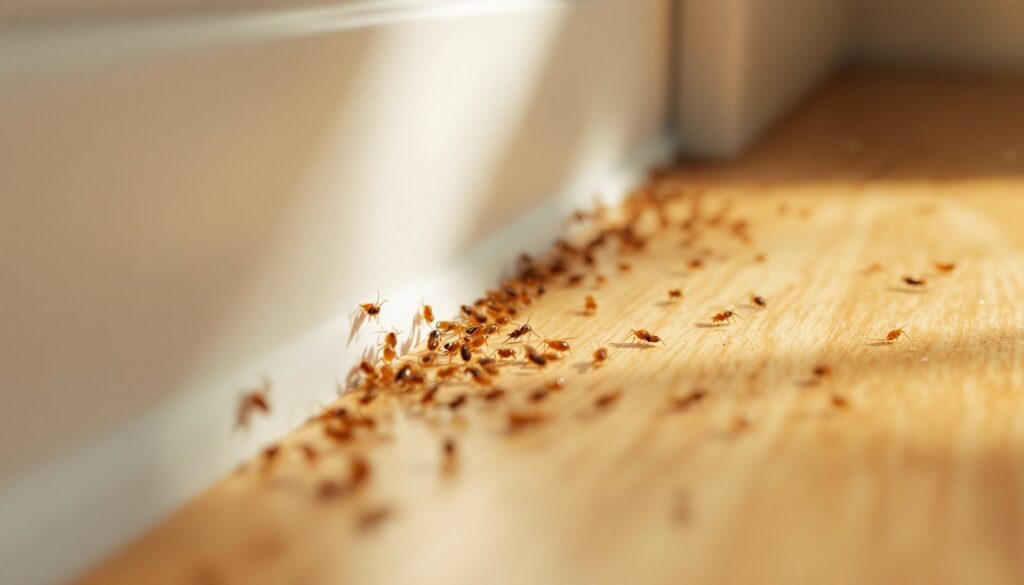
Ants: Argentine ants and odorous house ants measure 2–3 mm and often appear as tiny light brown bugs in house kitchens or bathrooms. They trail along baseboards, attracted by crumbs, spills, or pet food. Look for narrow-waisted bodies and segmented antennae.
Booklice (Psocids): These very tiny bugs in house libraries or damp closets are 1–2 mm long, pale brown or translucent, and feed on mold and starch. They thrive in humidity above 50% and often appear in new construction or after water leaks.
Springtails: Often mistaken for fleas, springtails are gray or brown, about 1–2 mm, and jump when disturbed. They congregate in damp areas, under sinks, around houseplants, or in basement corners, feeding on decaying organic matter.
Fruit Flies (Drosophila): Tiny bugs with wings in house that hover near overripe produce, recycling bins, or garbage disposals. They’re 2–3 mm, tan to reddish-brown, with distinctive red eyes. Lifecycle from egg to adult is just 8–10 days, so populations explode quickly.
Carpet Beetles and Clothes Moths
Carpet Beetles: Adults are 2–4 mm, rounded, and mottled brown or black with irregular patterns. The larvae, fuzzy, carrot-shaped, and 4–5 mm, do the real damage, feeding on natural fibers like wool, silk, and feathers. You’ll find them in closets, under furniture, or along baseboards where pet hair and lint accumulate. Shed skins and fecal pellets (tiny brown specks) are telltale signs.
Clothes Moths: Webbing clothes moths are 6–8 mm with golden-buff wings and avoid light. Their larvae spin silken tubes and chew irregular holes in fabrics, especially in dark, undisturbed areas like attic storage or seasonal clothing boxes. Unlike carpet beetles, moth larvae prefer protein-rich materials and are common where wool rugs or vintage textiles are stored. moth control strategies often emphasize vacuuming and temperature treatment.
Drain Flies and Fungus Gnats
Drain Flies (Psychodidae): Also called moth flies, these are 2–3 mm, fuzzy-bodied, and weak fliers. They breed in the biofilm lining drains, overflow pipes, and sump pump basins. If you see tiny bug in house bathrooms or utility sinks hovering near drains, suspect drain flies. A simple test: tape a piece of plastic wrap over the drain overnight: if flies are stuck to the underside by morning, you’ve confirmed the source.
Fungus Gnats: These tiny black bugs with wings in house swarm around overwatered houseplants. Adults are 2–3 mm, slender, with long legs and antennae. Larvae live in moist potting soil, feeding on organic matter and sometimes plant roots. They’re mostly a nuisance to the plant, not the homeowner, but large numbers indicate soil that’s staying too wet between waterings.
Why Tiny Bugs Invade Your Home
Understanding what draws pests indoors helps target the root cause, not just the symptoms.
Moisture and Humidity: Most tiny brown bugs in house environments thrive in relative humidity above 50%. Leaky pipes under sinks, condensation on basement walls, and poor bathroom ventilation create ideal breeding grounds for booklice, springtails, and drain flies. Check for water stains on ceilings, peeling caulk around tubs, and musty odors in crawl spaces.
Food Sources: Crumbs in pantries, spilled pet food, overripe fruit, and even organic debris in sink traps provide nutrition. Carpet beetles and clothes moths feed on natural fibers, pet hair, and dead insects trapped in light fixtures or wall voids. Even a single wool rug in a guest room can sustain a population for months.
Entry Points: Gaps around door sweeps, torn window screens, and cracks in foundation walls let outdoor pests migrate indoors. Ants follow scent trails: flying insects enter through unscreened vents or gaps around HVAC penetrations. Weatherstripping and caulk degrade over time, inspect annually and replace as needed.
Climate and Season: Spring and fall see spikes in indoor infestations as outdoor temperatures fluctuate. Overwintering pests seek warm shelter, while summer humidity spikes trigger breeding cycles. New construction or recent remodeling can introduce pests via lumber, cardboard, or disturbed soil.
How to Identify What Bug You’re Dealing With
Accurate identification saves time and money. Grab a magnifying glass or your smartphone camera with macro mode, most tiny bugs in house settings require close inspection.
Size and Color: Measure the bug against a millimeter ruler or compare to a grain of rice (about 7 mm). Note color: tiny light brown bugs in house are often booklice or young roaches: black specks may be springtails or flea beetles: reddish-brown usually points to fruit flies or carpet beetles.
Behavior: Does it jump (springtail or flea)? Fly weakly near a drain (drain fly)? Trail in a line (ant)? Cluster on windowsills (boxelder bugs or cluster flies, larger but often mistaken)?
Location: Bedroom small tiny bugs in house near closets or under beds suggest carpet beetles or clothes moths. Kitchen sightings near produce or trash indicate fruit flies. Bathroom or basement bugs point to moisture-loving species like booklice or silverfish.
Physical Features: Use your phone to snap a well-lit photo and zoom in. Count legs (six for insects, eight for mites), check for wings, antennae length, and body segmentation. Entomology extension offices at state universities offer free or low-cost identification services, submit a photo or specimen in a sealed vial with rubbing alcohol.
Reference Resources: Consult tiny house bugs pictures and names databases from university extension programs (Penn State, UC IPM, or Texas A&M AgriLife). These resources provide region-specific pest profiles and lifecycle details.
DIY Solutions to Get Rid of Tiny Bugs
Most infestations respond to targeted DIY interventions. Wear disposable gloves and safety glasses when handling cleaning agents or pesticides, and ensure adequate ventilation.
Drain Treatments: For drain flies, remove the P-trap under the sink and scrub it with a stiff brush and hot, soapy water. Pour a gel-based drain cleaner (like Invade Bio Drain) that clings to pipe walls and digests biofilm, liquid cleaners flow past without penetrating the slime layer. Repeat weekly for three weeks to break the breeding cycle.
Vacuuming and Steam: Carpet beetles and clothes moths require thorough vacuuming of baseboards, closet corners, under furniture, and inside drawers. Use a crevice tool to reach tight spots, then immediately seal and discard the vacuum bag outdoors. A handheld garment steamer kills larvae and eggs on contact, run it over fabric seams, rug edges, and upholstery tufts, holding the nozzle close enough to reach 130°F for at least 30 seconds.
Insecticidal Dusts: Apply food-grade diatomaceous earth (DE) in wall voids, behind baseboards, and under appliances. DE desiccates soft-bodied insects on contact but is harmless to humans and pets once settled. Use a hand duster (like the JT Eaton Duster) to apply a thin, barely visible layer, thick piles repel bugs and reduce effectiveness.
Traps and Baits: For fruit flies, set out apple cider vinegar traps: fill a jar with 1 inch of vinegar, add a drop of dish soap to break surface tension, and cover with plastic wrap secured with a rubber band. Poke small holes with a toothpick. Adults fly in but can’t escape. Replace every 2–3 days. For ants, use gel baits (like Terro or Advion) placed along trails, foragers carry the poison back to the colony, eliminating the queen.
Moisture Control: Run a dehumidifier in basements or crawl spaces to maintain relative humidity below 50%. Fix leaky faucets, re-caulk tub surrounds with 100% silicone caulk, and install exhaust fans rated for bathroom size (80 CFM minimum for a standard 5×8 bath). Check attic ventilation, inadequate airflow causes condensation on roof decking that drips onto insulation, creating habitat for booklice.
Professional-Grade Sprays: For stubborn infestations, consider residual insecticides like bifenthrin or deltamethrin (e.g., Talstar P, Suspend SC). Mix according to label directions and apply as a perimeter treatment along baseboards, door thresholds, and window frames. These products leave a barrier that kills insects for 60–90 days. Always follow label instructions, overuse harms beneficial insects and pollinates resistance. If you’re uncomfortable with pesticides, hire a licensed pest control operator who can apply commercial-grade materials safely and in compliance with local regulations.
Preventing Future Infestations
Prevention is cheaper and less disruptive than repeated treatments. Build these habits into your routine maintenance.
Seal Entry Points: Inspect the exterior foundation for cracks wider than 1/8 inch and fill with polyurethane caulk or hydraulic cement. Replace worn door sweeps and add or repair window screens (18×16 mesh minimum to block tiny bugs with wings in house). Check where utility lines (cable, gas, water) enter the home and foam-seal gaps with expanding foam insulation.
Reduce Humidity: Maintain indoor relative humidity between 30–50% year-round. In humid climates, this may require a whole-house dehumidifier tied into your HVAC return. In basements, ensure gutters and downspouts direct water at least 6 feet from the foundation: regrade soil if necessary to slope away from the house at 1 inch per foot for the first 10 feet.
Sanitation and Storage: Vacuum baseboards and under furniture weekly, especially in bedrooms and closets where pet hair and lint accumulate. Store out-of-season clothing in airtight plastic bins with tight-fitting lids, cardboard boxes allow entry and absorb moisture. Wash woolens and linens before storage to remove body oils that attract moths. Decluttering reduces hiding spots, as home organization practices can simplify both cleaning and pest monitoring.
Routine Inspections: Schedule quarterly walk-throughs: check under sinks for leaks, inspect pantry goods for webbing or frass (insect droppings), and examine houseplant soil for fungus gnat larvae. Rotate stored items annually so nothing sits undisturbed long enough to sustain a population. When bringing in secondhand furniture, firewood, or plants, inspect thoroughly outdoors before moving them inside.
Landscaping and Exterior Maintenance: Trim shrubs and tree branches at least 12 inches from siding to reduce pest highways. Store firewood on a rack 20 feet from the house and 6 inches off the ground. Clean gutters twice a year to prevent overflow that saturates soffit and fascia boards. Replace any rotted wood trim, decayed wood holds moisture and shelters insects.
Integrated Pest Management (IPM): Combine multiple tactics, exclusion, sanitation, moisture control, and targeted treatments, for long-term success. Many effective strategies align with broader home care routines that emphasize prevention over reaction. Monitor with sticky traps placed along baseboards or near suspected entry points: a sudden uptick signals the need for intervention before populations explode. If DIY methods fail after 4–6 weeks of consistent effort, consult a licensed pest management professional who can access commercial products and apply them according to Integrated Pest Management principles.