If you’ve ever dealt with crusty faucets, soap scum buildup, or clothes that feel stiff after washing, you’re already familiar with hard water. A water softener with salt is the most reliable solution, and the salt you choose matters more than you’d think. Water softener pellets are the workhorses of these systems, keeping your appliances running longer and your skin feeling smoother. But not all pellets are created equal, and choosing the wrong type can lead to clogs, extra maintenance, or wasted money. This guide walks through what water softener salt pellets actually do, how to pick the right kind for your setup, and how to maintain them without the guesswork.
Table of Contents
ToggleKey Takeaways
- Water softener pellets work by regenerating resin beads during a brine flush cycle, removing hard minerals like calcium and magnesium to keep your appliances running longer.
- Choose solar salt pellets for moderately hard water with low iron content (budget-friendly option), or evaporated salt pellets for very hard water or high iron content (99.99% pure, less maintenance).
- Test your water hardness and iron levels before buying—hardness above 10 grains per gallon and iron above 0.3 ppm indicate you should invest in higher-purity water softener pellets.
- Maintain your brine tank every 3–6 months by checking for salt bridges, sludge buildup, and water levels to prevent efficiency loss and extend system lifespan.
- Avoid common problems like salt bridging and mushing by not overfilling the tank, using high-purity pellets in humid conditions, and switching to evaporated salt if your water has high iron content.
- Find the cheapest water softener salt at farm supply stores, big-box home centers, or warehouse clubs by buying in bulk (4–6 bags at a time) and storing in a dry location.
What Are Water Softener Pellets and How Do They Work?
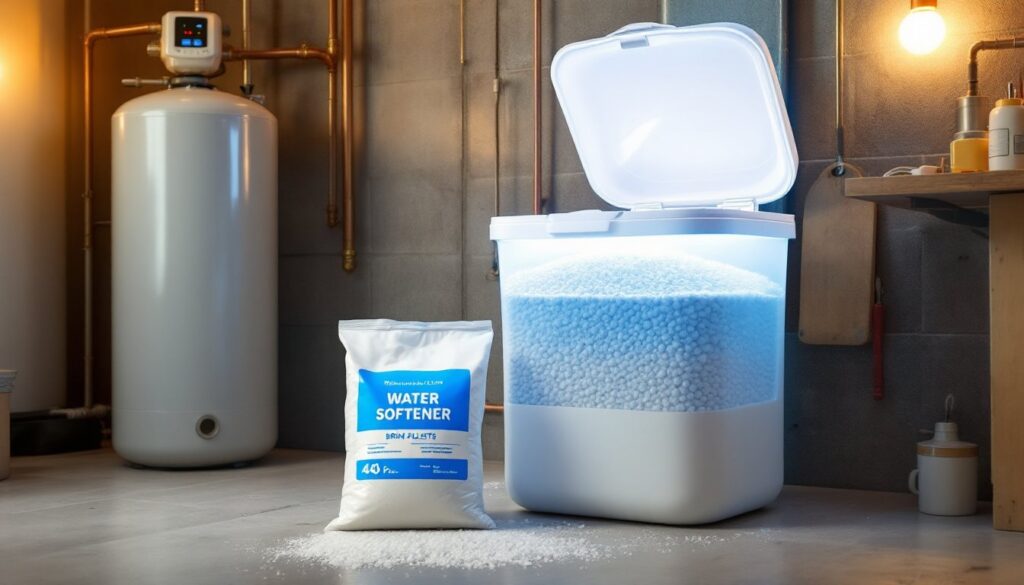
Water softener pellets, sometimes called water softener salt crystals or simply softener salt water media, are compressed salt granules used in ion-exchange water softeners. They’re the fuel that keeps your system running.
Here’s the quick version of how it works: hard water contains calcium and magnesium ions. When water flows through your softener’s resin tank, those ions latch onto tiny resin beads. Over time, the beads get saturated and can’t hold any more. That’s where the salt comes in. During regeneration, a concentrated brine solution (made from pellets dissolving in water) flushes the resin beads, swapping out the hard minerals for sodium ions. The system resets, and you’re back to soft water.
The pellets themselves dissolve slowly in the brine tank, creating that solution on demand. Water softener rock salt, pellets, and crystals all serve the same purpose, but their purity and form affect performance. Pellets are the most common choice for residential systems because they’re highly compacted, resist mushing, and handle humid conditions better than loose crystals.
One thing to note: the salt doesn’t soften the water directly. It regenerates the resin so the resin can do the softening. If you run out of salt, the system keeps running, but it stops removing hardness.
Types of Water Softener Pellets: Which One Is Right for Your Home?
Not all bags of salt for water softener systems are the same. The two main types you’ll see are solar salt and evaporated salt. Each has pros and cons depending on your water, your system, and how hands-on you want to be with maintenance.
Solar Salt Pellets
Solar salt for water softener systems is made by evaporating seawater or brine in outdoor ponds. The sun does the work, which makes it cheaper to produce, and that savings gets passed on to you. It’s typically 99.5% pure, which is more than enough for most residential setups.
Solar salt works well in areas with moderately hard water and low iron content. It’s widely available, and you can usually find it at hardware stores, home centers, or search for water softener salt near me to grab a few bags quickly. Many home maintenance guides recommend solar salt as a solid all-around choice for standard systems.
The downside? Solar salt can contain trace minerals or sediment, which may leave a small amount of residue in the brine tank over time. If your water has high iron, that residue can build up faster and require more frequent tank cleanups. But for most homeowners, it’s a reliable, budget-friendly option.
Evaporated Salt Pellets
Evaporated salt for water softener units is the premium option. It’s made through a controlled evaporation process that removes nearly all impurities, leaving salt that’s 99.99% pure. That extra purity means less buildup, fewer tank cleanings, and better performance in systems dealing with high iron or very hard water.
If your water has iron content above 0.3 parts per million, evaporated salt is worth the extra cost. It won’t leave behind the fine sediment that solar salt sometimes does, and it dissolves more cleanly. Some brands, like Diamond Crystal water softener salt, are known for their high purity and are a go-to for systems that need consistent, low-maintenance performance.
Evaporated pellets cost more, usually $2 to $4 more per bag, but the tradeoff is less hands-on work and longer intervals between brine tank maintenance. If you’re not keen on scooping sludge every few months, it’s a reasonable investment.
How to Choose the Best Water Softener Pellets for Your System
Picking the right pellets comes down to three things: your water quality, your softener type, and how much you want to spend.
First, test your water. If you haven’t done this already, pick up a water test kit or check your municipal water report. You’re looking for hardness (measured in grains per gallon) and iron content. Hardness above 10 grains per gallon is considered very hard. Iron above 0.3 ppm is enough to cause staining and buildup.
If your water is moderately hard (3–10 grains per gallon) and low in iron, solar salt pellets will do the job. They’re easier on the wallet and available almost everywhere. You can often find them at big-box stores or by searching water softener salt nearby for local suppliers.
If your water is very hard (10+ grains) or has noticeable iron, go with evaporated salt pellets. The extra purity prevents bridging (when salt clumps and forms a hard crust above the water line) and keeps the resin cleaner longer. Systems with electronic control heads or metered regeneration cycles benefit from this consistency.
Next, check your softener’s manual. Some manufacturers recommend specific salt types or warn against using rock salt, which is coarser and less pure than pellets. Most modern systems are designed for pellets or crystals, not rock salt.
Finally, consider cost versus maintenance. Solar salt is cheaper upfront, but if you’re cleaning your brine tank every three months instead of once a year, you’re trading dollars for time. Many cleaning and maintenance tips suggest choosing the salt that matches your schedule and tolerance for upkeep.
As for where to buy: the cheapest place to buy water softener salt is usually a farm supply store, big-box home center, or warehouse club. Prices fluctuate, but buying in bulk (four to six bags at a time) often knocks a few bucks off per bag. Just make sure you have dry storage space, wet salt is a mess.
How to Properly Add and Maintain Water Softener Pellets
Adding water softener crystals or pellets is straightforward, but doing it right prevents bridging, mushing, and wasted salt.
Step 1: Check the salt level. Open the brine tank lid and look inside. Most tanks have a fill line or recommendation in the manual. A good rule of thumb: keep the tank at least one-quarter full, but don’t fill it to the brim. Overfilling can cause bridging.
Step 2: Add pellets carefully. Lift bags of salt and pour slowly to avoid breaking apart the pellets or splashing water. If you’re switching salt types (say, from crystals to pellets), let the old salt run low first, mixing types can sometimes cause clumping.
Step 3: Break up any existing bridges. If you see a hard crust of salt above the waterline, gently break it up with a broom handle or mallet. Don’t smash the tank itself.
Step 4: Check water level. The water in the brine tank should be a few inches below the salt. If it’s above the salt or bone dry, something’s wrong, check for clogs in the brine line or a malfunctioning float valve.
Maintenance checklist (every 3–6 months):
- Inspect the brine tank for sediment buildup at the bottom.
- If there’s a thick layer of sludge, scoop out remaining salt, vacuum or scoop the sediment, and rinse the tank.
- Check the salt grid or platform (if your system has one) to make sure it’s not clogged.
- Wipe down the inside walls to remove any salt residue.
Most appliance maintenance guides recommend an annual deep clean for brine tanks, especially if you’re using solar salt or have high-iron water.
Safety note: Wear gloves when handling salt and sludge. Brine can be slippery, and prolonged contact can irritate skin.
Common Problems and Troubleshooting Tips
Even with the right water salt softener pellets, you’ll occasionally run into issues. Here’s how to troubleshoot the most common ones.
Salt bridging: A hard crust forms in the tank, leaving a gap between the salt and water. The system thinks there’s plenty of salt, but the brine isn’t forming. Fix: Break up the bridge with a broom handle. Prevention: Don’t overfill the tank, and use high-purity pellets if humidity is high.
Mushing: A thick sludge of undissolved salt and sediment builds up at the bottom of the tank. This blocks water flow and reduces regeneration efficiency. Fix: Scoop out the mush, clean the tank, and refill with fresh pellets. Prevention: Use evaporated salt if your water has high iron or sediment.
Salt isn’t dissolving: If the level hasn’t dropped in weeks, check the water flow into the brine tank. A clogged brine line, faulty injector, or broken float valve can prevent water from entering. Inspect these components or call a plumber if you’re not comfortable troubleshooting valves.
Brown or yellow water after adding salt: This usually means iron buildup or sediment in the tank. Flush the system, clean the brine tank, and switch to evaporated pellets.
Tank overflowing: A stuck float or clogged drain line can cause the brine tank to overfill. Turn off the water supply to the softener, check the float mechanism, and inspect the drain line for kinks or blockages.
Most of these issues are DIY-fixable with basic hand tools and a shop vacuum. But if your softener is under warranty or you’re dealing with valve or control head problems, consult a water treatment professional before you start taking things apart.
Bottom line: Using the right pellets, keeping the tank clean, and checking salt levels regularly will keep your water softener running smoothly for years. It’s a low-effort investment that pays off in fewer plumbing headaches and softer water.